Modern Living Room That Still Feels Lived In
My living room used to look fine in photos and feel wrong in real life. The sofa faced the television, the coffee table was a landing strip for keys, chargers and unopened post, and every chair seemed to be angled at nothing in particular. It was a room we walked through, not a room we sat in.
The fix was not a new sofa. It was deciding what the room is actually for: conversation first, television second, and everything else kept out of sight. Once that decision was made, the colours, the layout and the storage all fell into place. A muted, modern living room is not a showroom. It is a calm backdrop that lets people, books and an evening’s conversation be the interesting part.
Here is the version I would build again — decision by decision.
1. Start with a muted palette, and give every colour a job
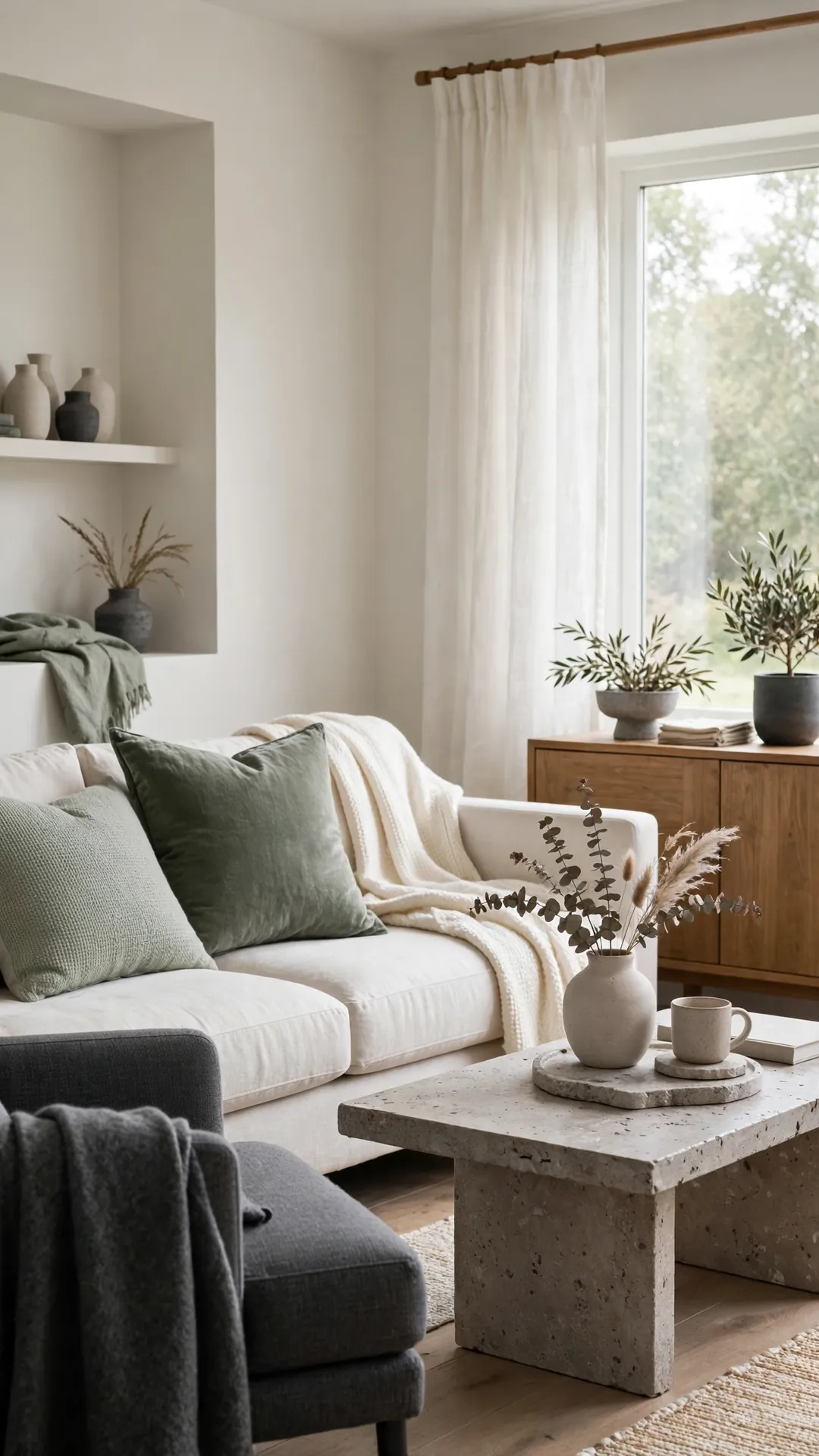
As with a bedroom, a muted palette fails when it is one flat colour everywhere. It works when each shade has a clear role.
Try this four-colour recipe:
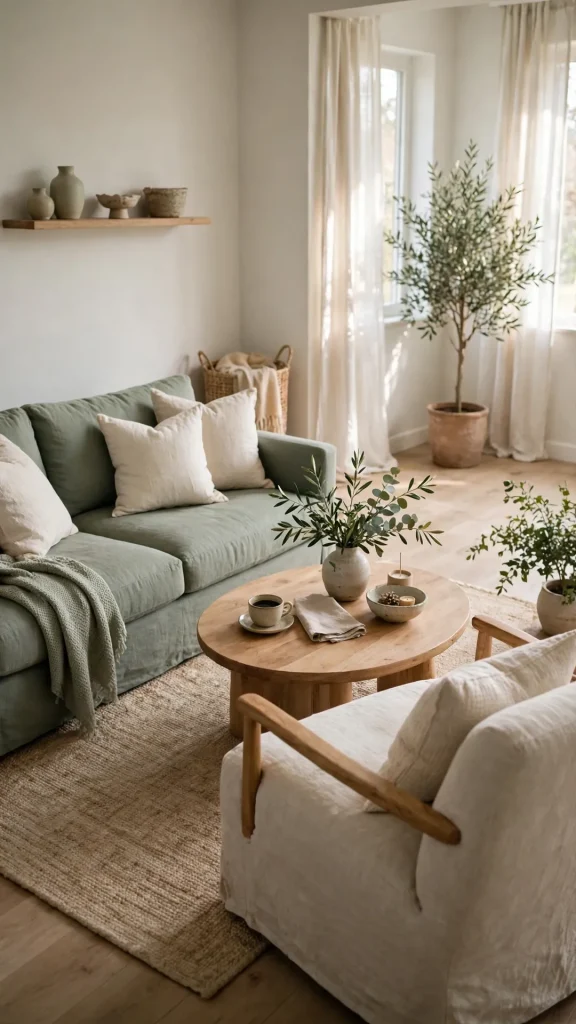
- Warm white for the walls and ceiling. It bounces light around the room, which matters more in a living room than anywhere else, because this is where you spend the most waking hours at home.
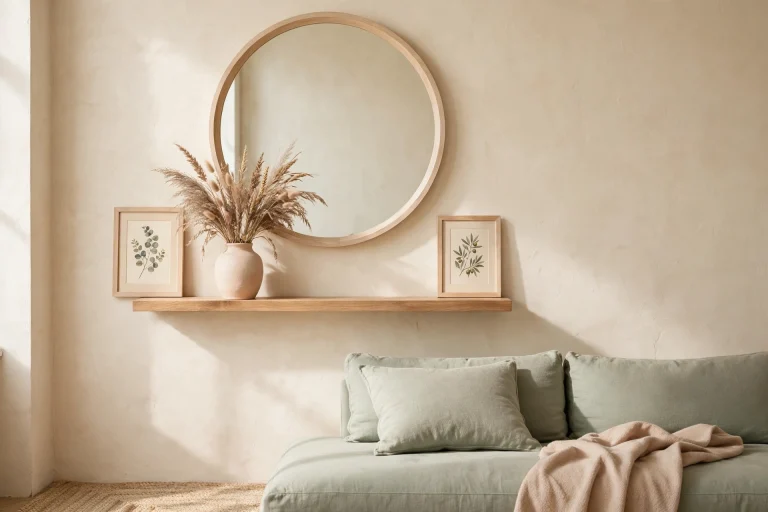
- Sage for calm. Use it on cushions, a throw, a rug border, or one armchair — not on every surface. Sage is the colour this blog is built around for a reason: it reads as nature, not decoration.
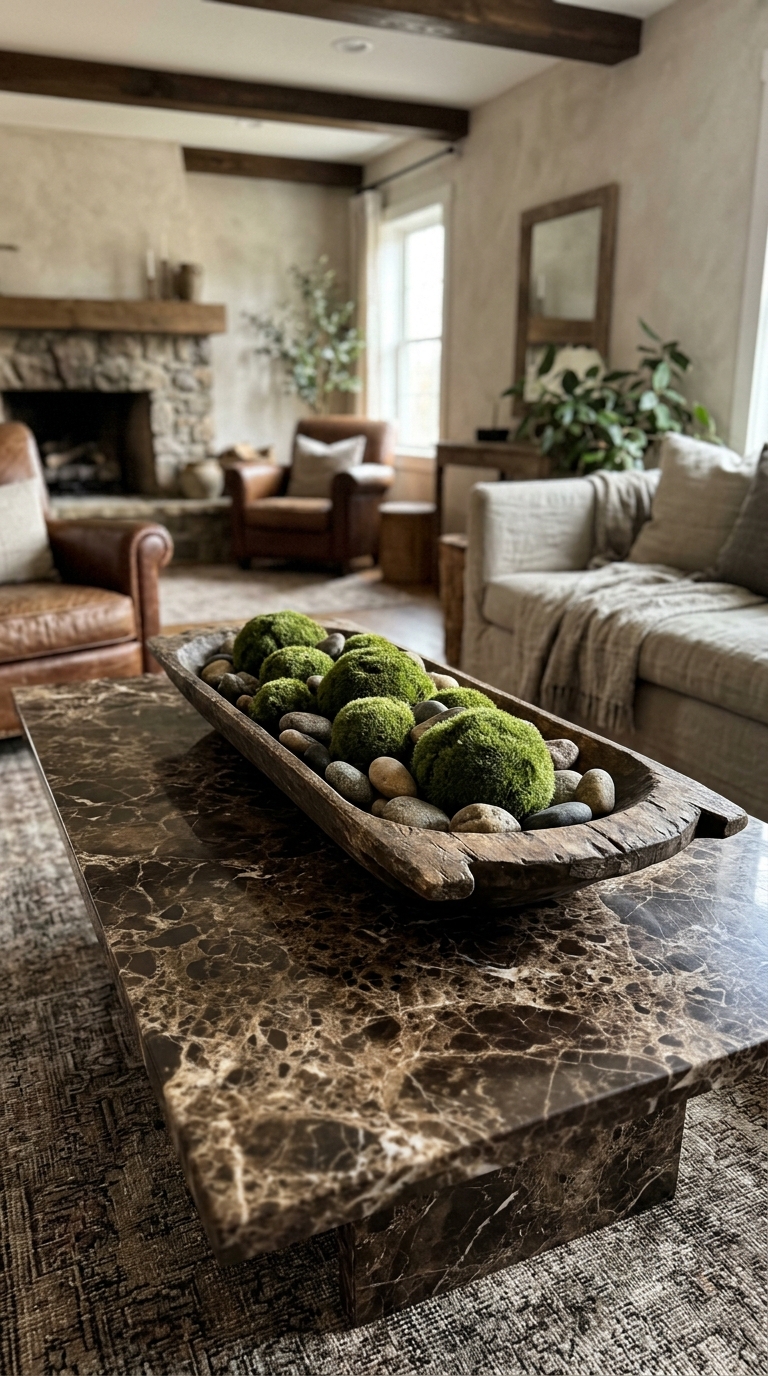
- Stone, warm grey or light wood for grounding. A wooden coffee table, a stone-toned rug, or natural oak shelving stops the room from floating away into paleness.
- Charcoal for definition. Just a little — a lamp base, picture frames, the legs of a chair, or a dark cushion. Charcoal gives the eye somewhere to land, so the soft colours do not blur together.
Keep the big, expensive pieces neutral — sofa, rug, curtains — and bring colour in through things you can change cheaply: cushions, throws, art and plants. That way the room can evolve without a new sofa every few years.
A quick test before you commit: look at your fabric and paint samples in daylight and in evening lamplight. Muted colours shift more than bold ones do, and a shade you love at noon can look grey and dull at 9 p.m.
2. Arrange seating for conversation, not for the television
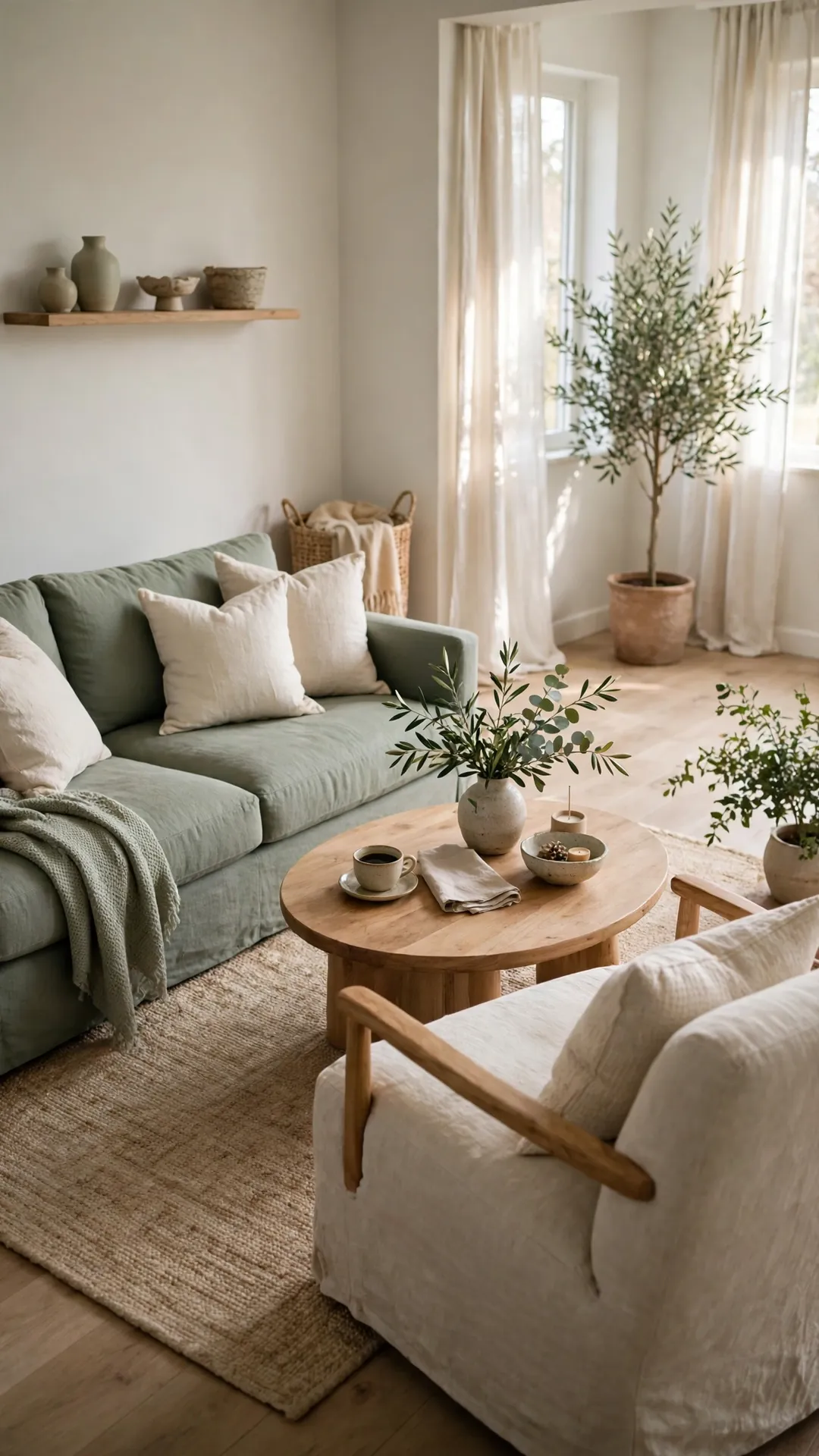
Most living rooms are arranged by default: sofa against one wall, television against the other, everything else fitted around that line. Turn that around.
Put the sofa and chairs in a loose conversation shape — facing each other, or at a right angle — with a coffee table in the middle that everyone can reach. Leave enough space to walk around the seating without squeezing past a chair, and keep at least one clear path through the room. If the television has to be in the room, let it sit to the side of the conversation, not at the head of it. You will watch just as much, and talk a lot more.
Three layout checks that cost nothing:
- Can two people sit and talk without raising their voices or turning their heads sharply? If not, the chairs are too far apart.
- Can someone put a cup down without standing up? If not, you need a side table, not a bigger coffee table.
- Is there one seat that gets the best natural light in the afternoon? That is where reading will actually happen — put a lamp and a small table there, on purpose.
If the room is small, do not shrink everything. One comfortable two- or three-seater, one good armchair and a small side table will feel calmer than a full suite squeezed in. This is the same thinking behind the small-space ideas in the bathroom post: use the space you already have before you buy anything new. If you missed it, the bathroom ideas are here: 9 Tiny Bathroom Remodel Ideas on a Budget
3. Lighting: warm, layered, and dimmable
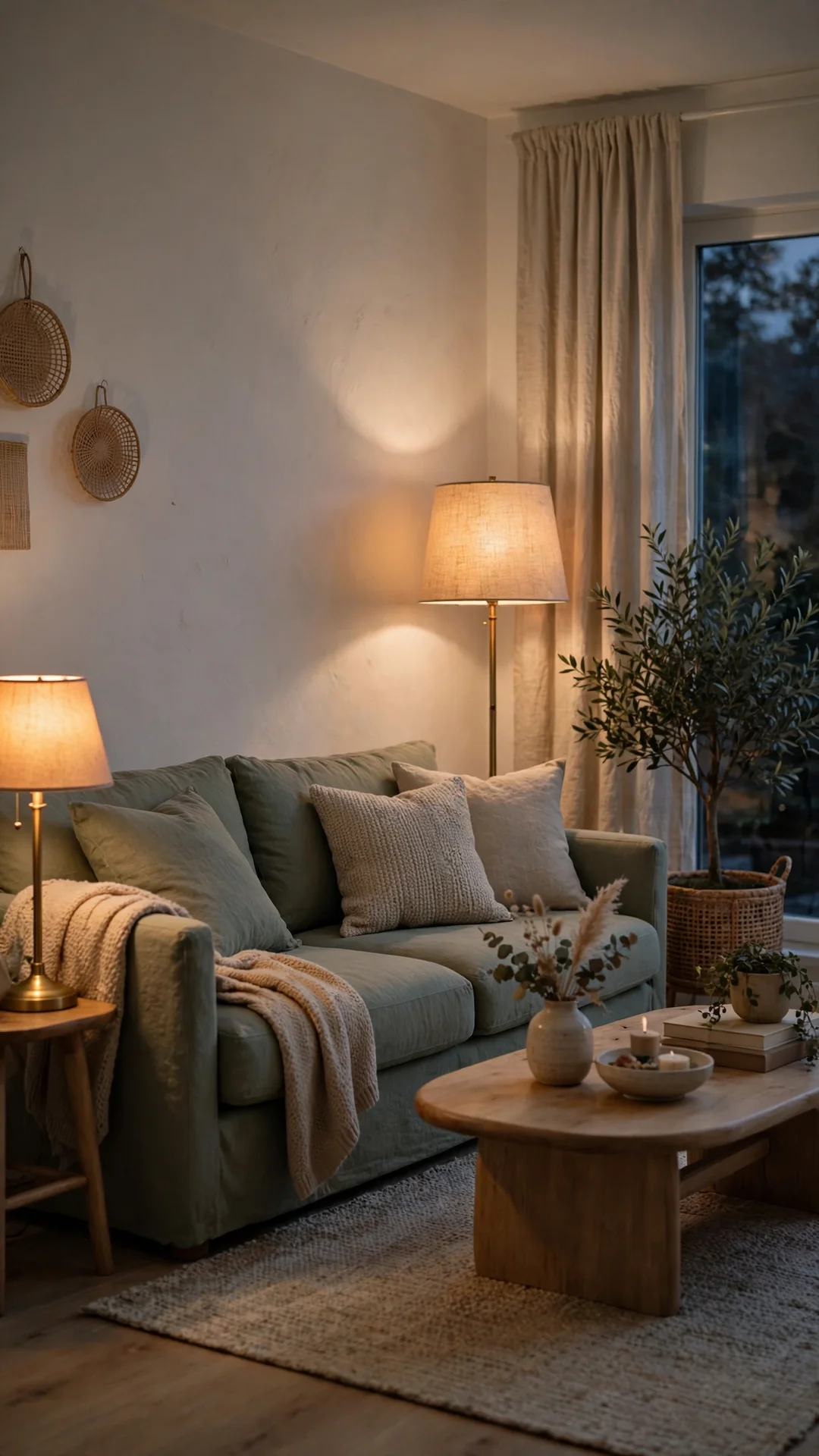
One bright ceiling light flattens a living room in the evening and makes it feel like a waiting room. Build three layers instead:
- General light: a ceiling light or pendant, on a dimmer if you can manage it. Keep it warm white, around 2700K, not cool daylight.
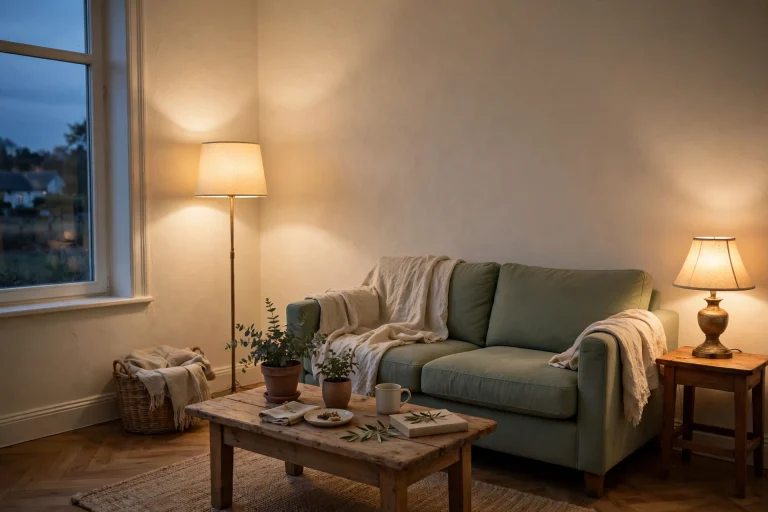
- Task light: a floor lamp beside the reading chair, or a table lamp on a side table. These are the lights you actually live with after dark.
- Low light: a small warm lamp, a candle-style LED, or a dim light on a shelf for the last part of the evening. This is the layer that makes the room feel cosy rather than merely lit.
One budget swap that makes a real difference: if you cannot rewire for a dimmer, use smart bulbs or lamps with three brightness settings. You get most of the effect for the price of a bulb, with no electrician needed.
Keep the brightest light off the television wall in the evening if you can. A lamp behind or beside the seating gives a softer glow and far less glare than an overhead light bouncing off a screen.
4. Spend where you sit, save where you look
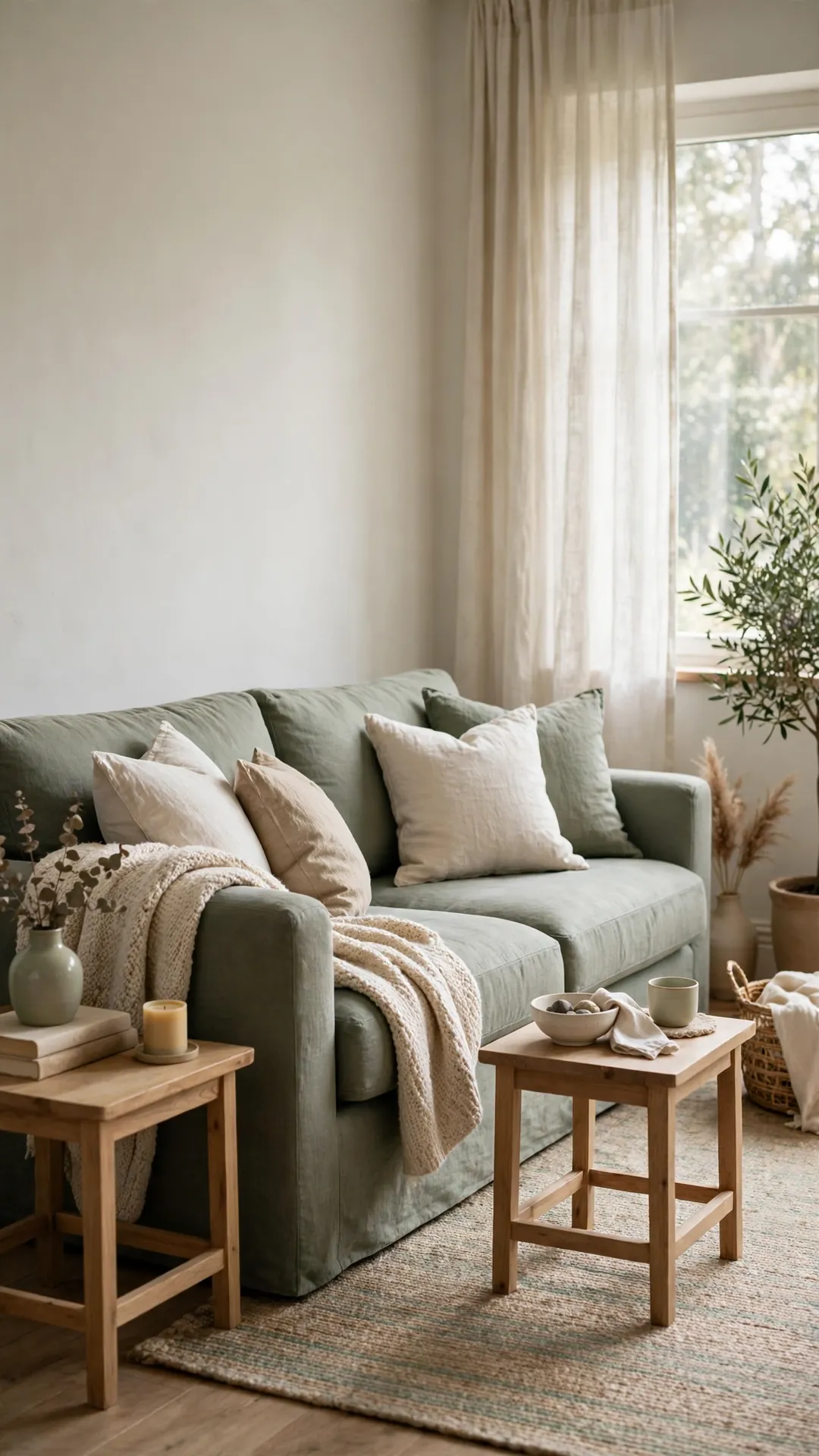
You sit in this room every day, so this is where comfort should win over appearance.
Spend on: the sofa’s comfort and fabric durability, and one good reading lamp. A sofa that looks perfect but is uncomfortable will quietly push everyone into another room.
Save on: the decorative layer. A plain rug in a stone tone, cushions in your chosen palette, a simple throw, and one or two pieces of art you actually like are enough. You do not need a styled shelf in every corner — in fact, a room with one calm focal point, such as a piece of art or a plant, feels more designed than a room with ten small ornaments competing for attention.
Add texture instead of colour when you want interest: linen cushions, a wool throw, a woven rug, brushed wood, a ceramic vase. Texture reads as warmth without shouting, and it is what stops a muted room from feeling flat.
5. Storage that keeps the room calm
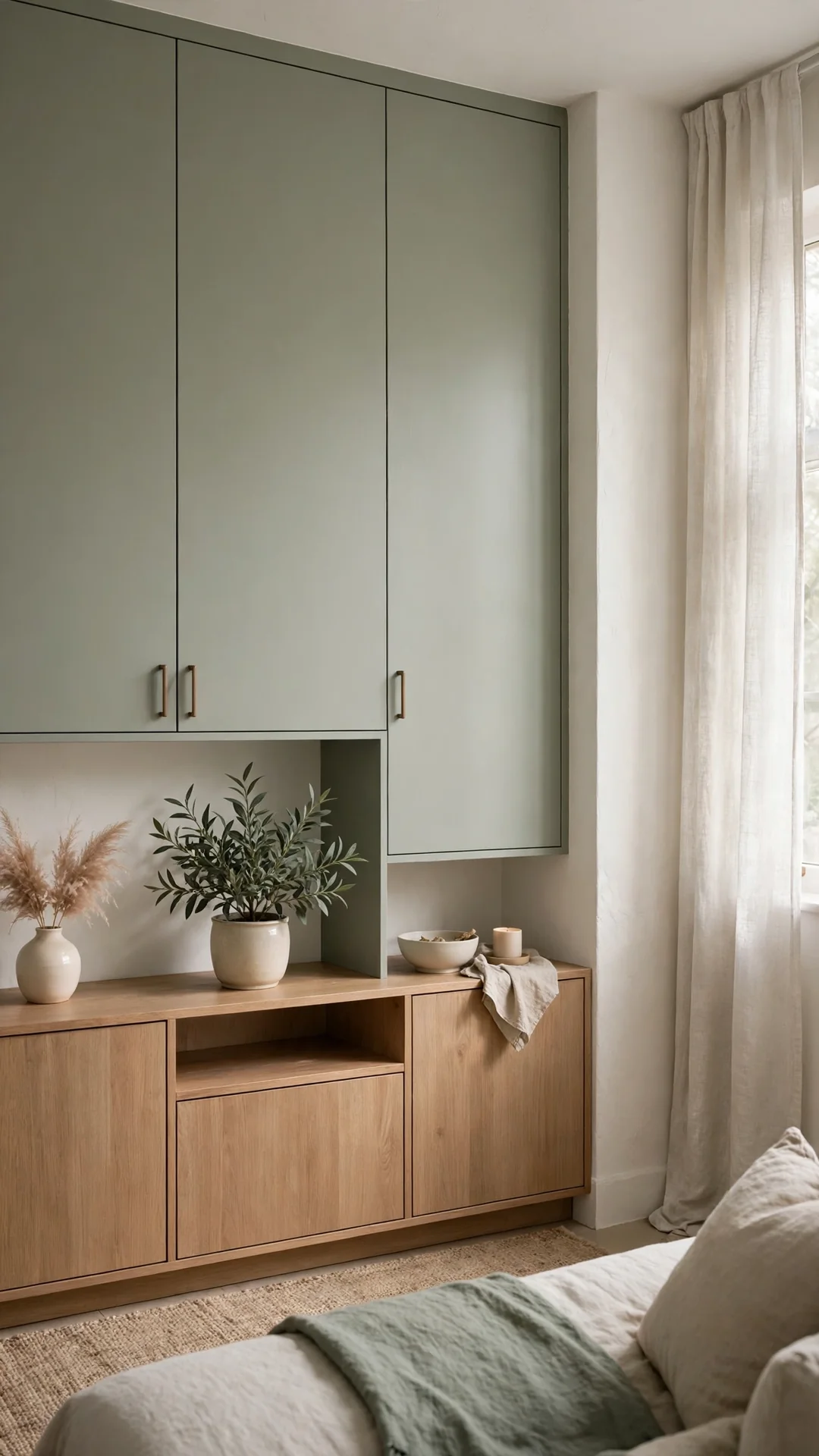
A living room collects things — remotes, chargers, books, toys, post — faster than any other room. A calm room needs closed storage first, and open storage second.
The closed-storage rule: most everyday things should live behind a door, in a drawer, or in a lidded basket. A low sideboard, a storage ottoman, or a basket for throws and remotes will do more for calm than any colour scheme.
The one-open-shelf rule: allow yourself one open shelf, or one open surface, for the things you genuinely like looking at — a plant, a framed photo, a few favourite books. Everything else goes away. When that shelf starts to fill up, something has to leave before something new arrives.
Two practical fixes that help immediately: a small tray or basket by the sofa for remotes and chargers, so they stop migrating across the coffee table, and a lidded basket for the things that belong in another room but always end up here. Empty both once a week, and the room resets itself.
6. Three common mistakes to avoid
Too many colours. A muted room with five accent colours is not muted anymore. Pick your four colours, and repeat them. Repetition is what makes a room feel designed rather than collected by accident.
All-white flatness. All white, with no wood, no texture, and no darker accent, can feel like a showroom, not a living room. Add texture and one darker note — charcoal, walnut, or black metal — and the room immediately feels warmer.
Furniture pushed against every wall. It feels logical, but it leaves a dead space in the middle and makes conversation harder. Pull the seating even a few centimetres off the wall, add a side table or a floor lamp behind it, and the room will feel intentional rather than parked.
A small-budget makeover checklist
If you want to start this weekend, do it in this order:
- Remove everything that does not belong in the living room, and everything you have not used in a month.
- Pull the seating into a conversation shape, and clear one path through the room.
- Swap the ceiling bulb for a warm one, and add or fix a reading lamp.
- Add one closed storage solution — a lidded basket or a storage ottoman is the cheapest start.
- Put one plant, or one piece of art, where you will see it when you walk in.
- Stop there, live with it for a week, and only then decide what else the room actually needs.
You may find, as I did, that steps one to five already change how the room feels — and that the urge to buy more fades once the room is calm.
FAQ
Can a muted living room still feel warm and welcoming?
Yes, if you use warm whites, natural wood, and texture. Coldness usually comes from cool white paint, grey light, and hard surfaces with nothing soft to balance them — not from the muted palette itself.
Do I need to buy matching furniture?
No. Matching sets can look flat. It is better to repeat colours and materials — for example, light wood in two or three pieces — than to buy everything from one range.
What if my living room is very small?
Keep the palette light, choose fewer, better seats, keep furniture low where possible, use a mirror to bounce light, and be stricter about the one-open-shelf rule. Small rooms reward restraint more than large ones do.

About the author
Hi, I'm Alia. I write about calm, muted homes that still feel lived in — better light, softer colours, and simple ideas that work on a real budget, learned in my own small home.