How to Layer Warm Lighting in a Small Living Room Without Making It Harsh
I used to think my living room was finished. The sofa was in place, the walls were a soft cream, and by day the room felt calm and light. Then evening came, I switched on the ceiling light, and everything changed. The room looked flat and the corners disappeared into shadow. It was bright, but it was not welcoming.
For a long time I blamed the size of the room. What I learned instead was simpler and much cheaper: one harsh light was the problem, not the room. Warmth comes from layers, not from brightness. Once I added light in small, separate pools, the same room felt softer and much easier to sit in after a long day.
This method needs no rewiring and no expensive designer lamps. Most of it can be done in a weekend, one lamp at a time.
Step 1: Notice What Is Wrong First
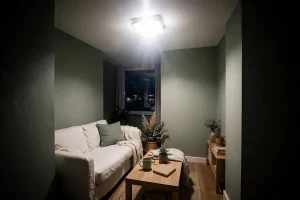
Before you buy anything, spend one evening just noticing. Sit where you usually sit, turn on your normal lights, and ask three questions. Where is the light too bright? Where is it missing? And where does it make you squint?
In my room, the answers were clear. The ceiling light threw hard light onto the middle of the rug, while the reading corner stayed dim and the hallway corner looked like a black hole. My eyes kept jumping between the brightest and darkest places, which is why the room felt tiring.
Take a phone photo of the room at night, too. Our eyes adjust as we move around, but a photo shows the glare, dark corners, and cold bulb colour all at once. That photo stopped me from buying another bright bulb in the hope that more light would fix a lighting problem.
Step 2: Build the Three Layers
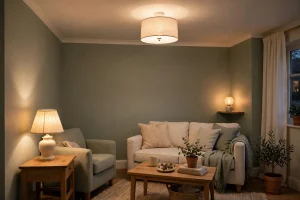
Good living room lighting is rarely one light doing everything. It is three layers working together, each with a different job.
Ambient light is the general glow that lets you move around safely. In a small room, this does not need to be a ceiling light at full power. It can be a dimmed ceiling light, a floor lamp bouncing light off the ceiling, or two small lamps together. The aim is a low, even base, not a spotlight.
Task light is focused light for something specific, like reading or working through post at the side table. It should be closest to you, and easy to switch on without lighting the whole room.
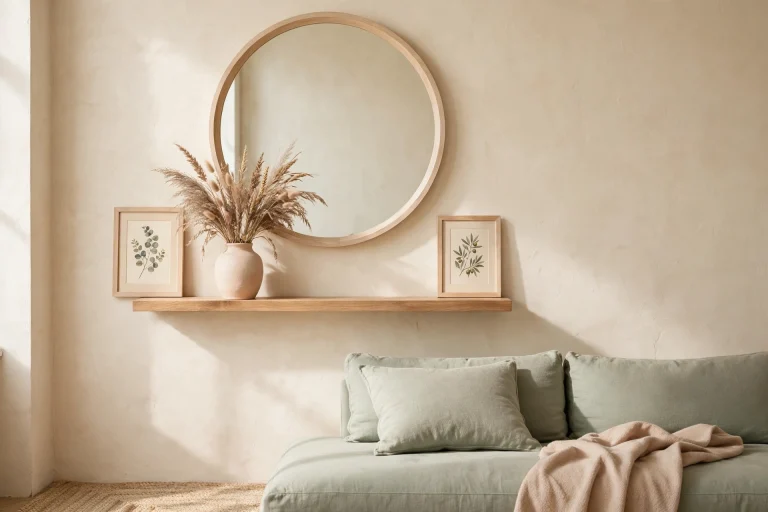
Accent light is the quiet third layer. It draws the eye to something pleasant: a shelf, a plant, or a framed print. It does not need to be bright. A small warm glow on a bookshelf can make a whole wall feel considered.
When I finally had all three, the room stopped feeling like a stage. I could read without a headache and talk without glare, without switching on a harsh overhead light.
Step 3: Choose Warm Bulbs and Add Dimmers
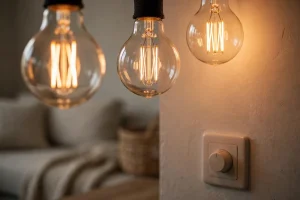
The fastest change I made cost the least. I swapped every cool white bulb for warm white bulbs at around 2700K. Bulbs labelled daylight or cool white, often around 4000K to 5000K, can make cream walls look grey and skin look washed out. A 2700K bulb gives the soft, golden glow most of us associate with evening at home.
I use LED bulbs because they stay cool and last longer. Check the box, not just the words on the front. Some bulbs say warm but are closer to 3000K, which is still fine, but 2700K is my safe starting point.
Then I added dimmers without touching the wiring. A plug-in dimmer for a table or floor lamp costs little and lets you turn a lamp down for conversation or up a little for reading. I now keep the ceiling light, when I use it at all, at its lowest comfortable setting. Dim light in the evening is not a flaw; it tells your body the day is winding down.
Step 4: Place Lamps at Different Heights
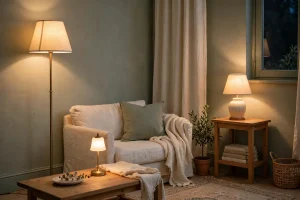
This was the step that changed the room most. Before, all my light came from above. Now it comes from three heights, and the room feels taller and more interesting because of it.
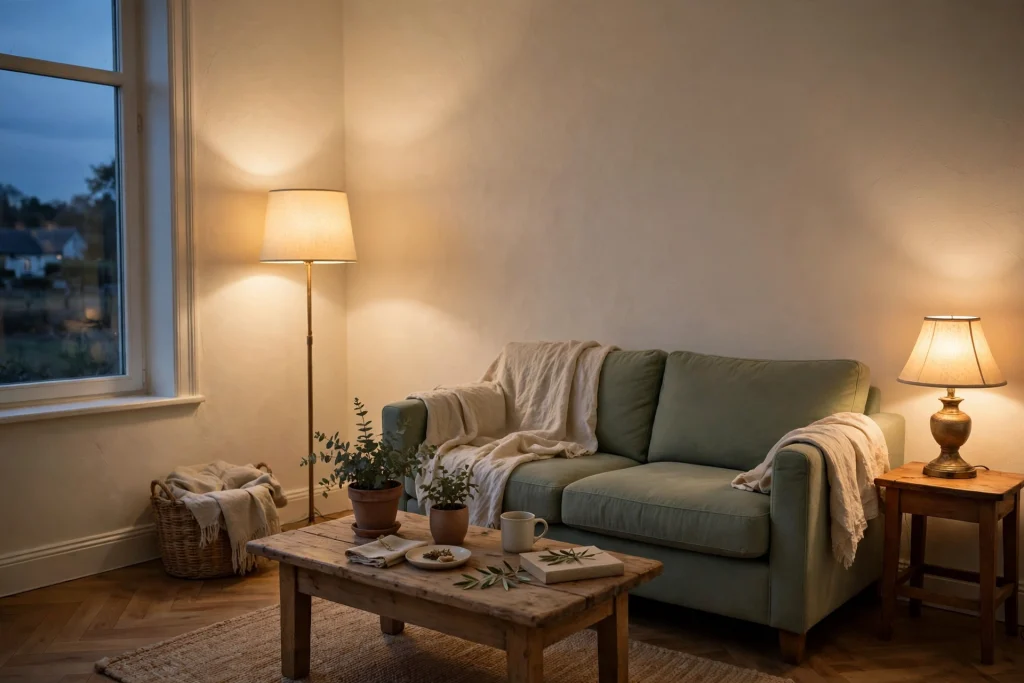
I start with a low light, usually a table lamp on a side table beside the sofa. A lamp around 24 to 28 inches tall works well here, because the bottom of the shade sits close to seated eye level. That means the light falls onto a book or a cup of tea, not directly into your eyes.
Next comes a taller light, often a floor lamp in a corner. A floor lamp around 58 to 64 inches tall can wash light up a wall without dominating a small room. I keep mine in the corner I used to ignore, and suddenly it feels like part of the room rather than a gap.
Finally, I add something very low or hidden, such as a small lamp on a bookshelf or a battery puck light tucked under a shelf. Its job is to remove one dark patch and give the room depth. When lamps sit at different heights, shadows become soft and layered instead of hard and empty.
Thrifted lamps are perfect for this. I found my favourite floor lamp second-hand and paired it with a simple cream linen shade. A new shade can transform an old base completely, for far less than a new lamp. Just check the cord and plug before you buy.
Step 5: Fix Glare and Shadows
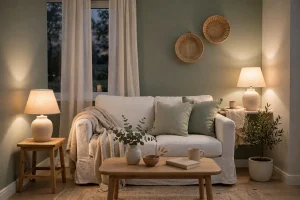
Warm bulbs alone will not help if the light is pointed in the wrong place. Glare usually comes from a bare bulb you can see directly, a shiny screen facing a lamp, or a light bouncing off a glass frame.
The fix is mostly about position. Turn a lamp shade slightly, move a lamp a few inches to the side, or angle a floor lamp so it washes a wall instead of shining across the room. If you can see the bulb itself when you sit down, the lamp is too high, too low, or in the wrong spot. A shade should hide the bulb from your normal seated view while letting light spill above and below it.
Shadows need the opposite treatment. A deep shadow beside a chair usually means that chair has no light of its own. Move the nearest lamp closer, or let a floor lamp share its glow between two seats. I also keep light away from the television wall in the evening. A small lamp behind or beside the sofa, rather than opposite the screen, stops the worst reflections.
Pale walls help here, too. My cream walls bounce warm light softly, so I do not need as many lamps as I thought. If your walls are darker, you may need one extra low light, but still keep each light soft rather than turning one lamp up to full power.
Step 6: Do a Simple Evening Test
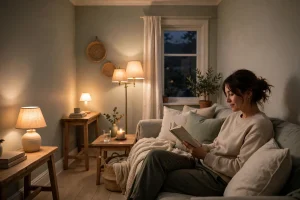
Once your layers are in place, test them properly. Wait until dusk, close the curtains as you normally would, and switch off the ceiling light completely. Then switch your lamps on one at a time, starting with the lowest and softest.
Sit for ten minutes and do what you actually do in the evening. Read a few pages, or simply sit and look around. Can you read without leaning forward? Can you see the whole room without a dark corner pulling your attention?
Adjust one thing at a time. Dim the brightest lamp a little, or move a lamp six inches closer to the chair. I did this test three evenings in a row, making only one small change each time, and by the third night the room felt settled. Lighting that looks good for five minutes can still feel tiring after an hour.
Mistakes to Avoid
- Using only the ceiling light. One overhead source flattens a small room and creates hard shadows, however bright it is.
- Choosing cool daylight bulbs for the evening. They can make a calm room feel clinical and make warm wood and cream paint look cold.
- Putting every lamp at the same height. When all the light comes from one level, the room loses depth and corners stay dark.
- Buying brightness instead of control. A dimmable warm lamp you can turn down is more useful than a very bright lamp you can only switch on or off.
A Calm Closing, and a Weekend Checklist
My living room is still small, with the same sofa and cream walls. What changed is how the room behaves after dark. Now the light arrives in layers, the corners are gentle rather than empty, and I look forward to sitting there in the evening with a book and a warm drink.
Keep it simple and start with what you already own. Move a lamp before you buy one, and change a bulb before you change a room.
Weekend checklist:
- Swap living room bulbs to warm white, around 2700K.
- Switch off the ceiling light and test your lamps one by one at dusk.
- Place one lamp low beside your seat and one taller lamp in a dark corner.
- Add a plug-in dimmer to the lamp you use most.
- Move or angle any lamp that causes glare or shines directly into your eyes.
- Sit for ten minutes, read, and adjust only one thing at a time.

About the author
Hi, I'm Alia. I write about calm, muted homes that still feel lived in — better light, softer colours, and simple ideas that work on a real budget, learned in my own small home.