How to Style a Muted Entryway in 3 Simple Steps
I used to rush through our entryway without really seeing it. Keys landed wherever they landed, shoes gathered by the door, and the whole space felt like a passage rather than a part of our home. It was not messy in a dramatic way, just unsettled, and that unsettled feeling followed me into the rest of the house.
One quiet afternoon I decided to treat the entryway the way I treat a room I actually live in. I did not buy a whole new set of furniture or repaint everything. I simply slowed down, cleared what did not belong, and gave each thing that stayed a calm, clear place. The change was small, but the feeling when I walk in now is completely different.
What follows is the simple process I used, in three steps. It works in a narrow hallway, a small apartment nook, or a wider entrance, because it is built on restraint rather than square footage. Take it at your own pace, one step at a time, and let the space stay quiet.
1. Clear the space and choose one calm anchor piece
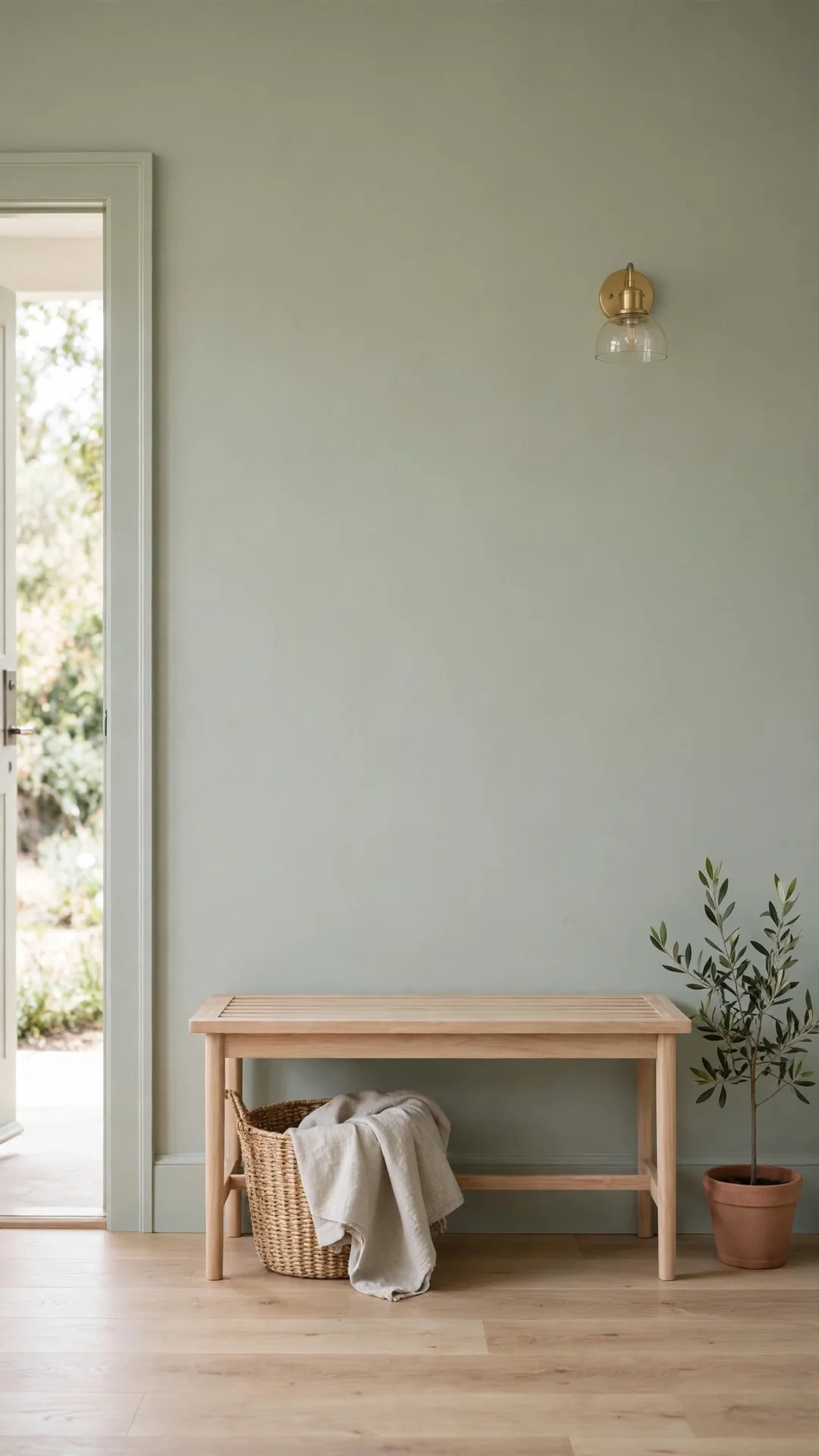
I started by taking everything out. Not rearranging, not tidying into piles — actually removing it all, so I could see the bare walls and floor again. It felt a little stark at first, but that emptiness was useful. It showed me how much light the space really gets, where my eye naturally lands when I walk in, and which corners were only collecting things because there was nowhere else for them to go.
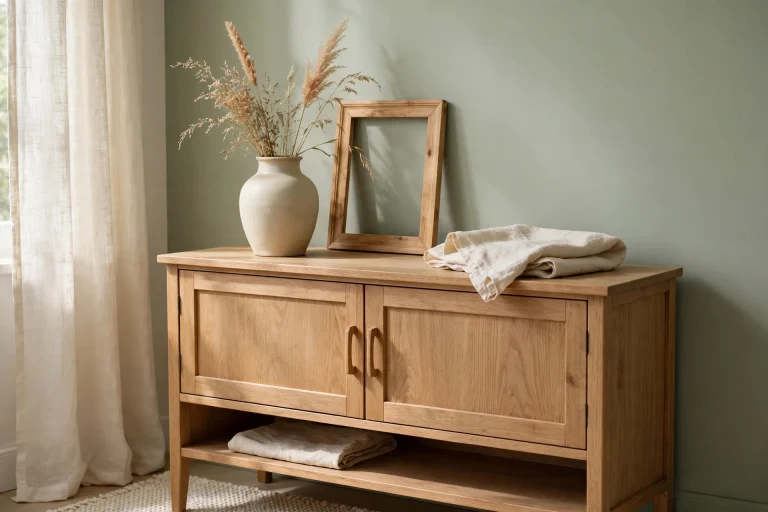
With the space empty, I chose one calm anchor piece and let it set the tone for everything else. In our home that piece is a simple light wood bench. It is not grand or ornate, and that is exactly why it works. It gives the entryway a purpose — a place to sit for a moment, to set a bag down, to pause — without filling the room with visual noise. A bench, a slim console, or a single low stool can all do this job, as long as the piece feels quiet and steady.
Then I brought back only what we truly use every day, and I gave each of those things a home near the anchor piece. A small dish for keys, a hook for the coat I reach for most, a basket tucked under the bench for shoes. Everything else found a home in another room. The entryway finally felt like it had room to breathe, and keeping it that way became easier, because there was simply less to manage.
2. Add a console, mirror and one piece of art
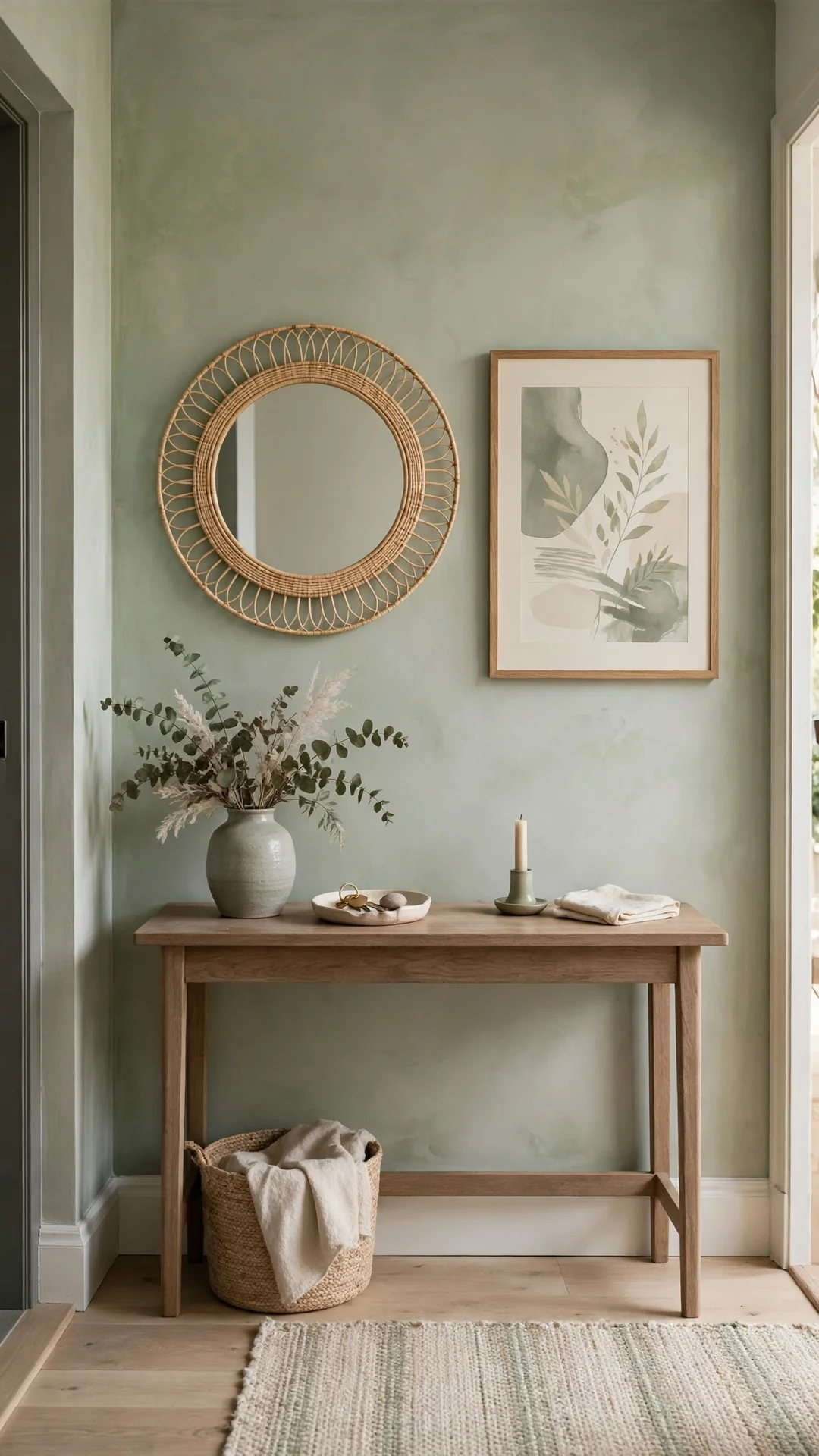
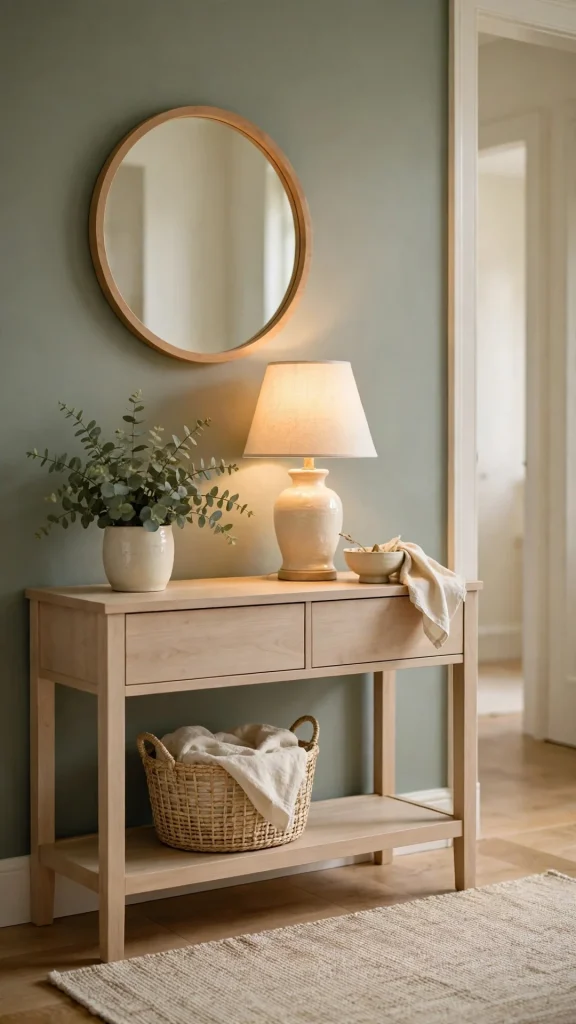
Once the space was calm, I added the pieces that make it feel finished rather than empty. A slim console table came first, placed against the longest wall so it did not block the walkway. I kept its surface almost bare: a small ceramic vase, a candle I actually light, and the key dish. Leaving space on the console matters more than filling it, because that empty surface is what keeps the whole entryway feeling unhurried.
Above the console I hung a round mirror, and it changed the space more than anything else I added. It bounces the daylight around, makes a narrow hallway feel wider, and gives me a gentle last glance before I leave the house. I chose a simple wooden frame in a warm, pale tone so it blends with the wall rather than competing with it. A mirror with a heavy or fussy frame would have pulled the whole corner off balance.
Finally, I added just one piece of art — a soft, abstract print in sage and cream, hung at eye level beside the mirror. One piece, not a gallery wall. When there is only one artwork, you actually look at it, and it gives the entryway a quiet personality of its own. If you love art, it can be tempting to add more, but in a small entrance, restraint is what keeps the space feeling serene instead of busy.
3. Finish with baskets, a plant and warm light
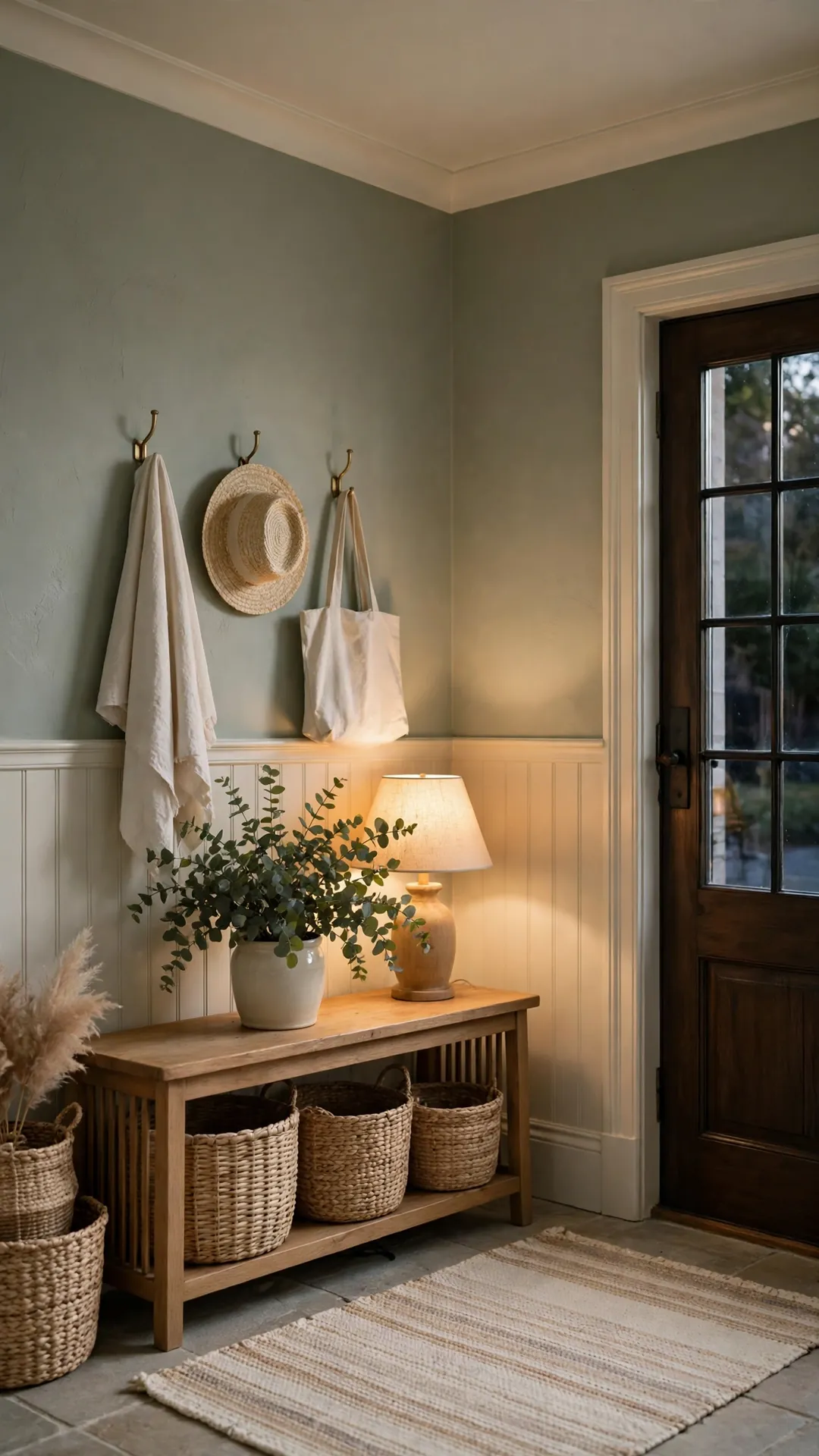
The last step is the one that makes the entryway feel lived in rather than staged. I added two woven baskets: one under the console for shoes and everyday clutter, and one by the bench for scarves and bags. Baskets are wonderfully forgiving — they hide the untidy bits while still looking soft and natural, and their texture warms up pale walls in a way that hard storage never quite does.
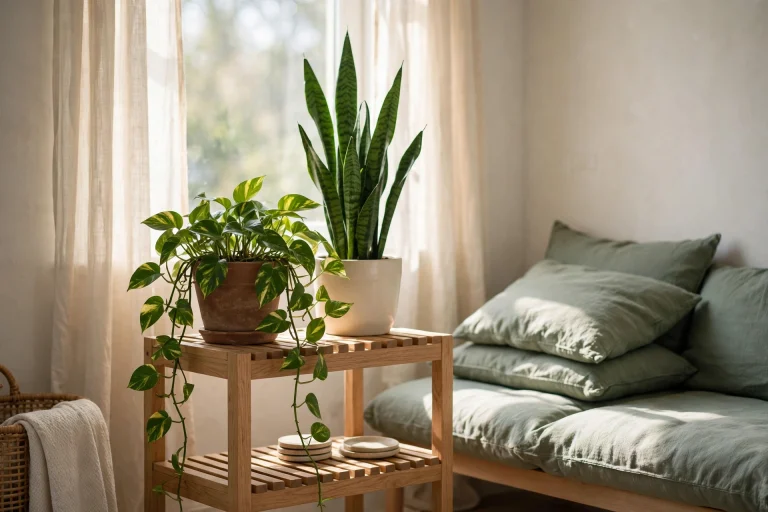
Then came a plant, a leafy green one in a plain cream pot on the floor beside the console. It is the only strong burst of green in the space, and that is enough. Every time I walk past it, the entryway feels a little more alive, a little less like a corridor. If your entrance gets very little light, choose a plant that tolerates shade, or use a realistic faux plant in the same quiet pot — the feeling of greenery matters more than the plant itself.
The final touch was warm light. I swapped a cold, bright bulb for a warm one and added a small lamp on the console for the evenings. In the daytime the entryway is bright and airy, and in the evening it glows softly, like a welcome rather than a hallway. That warm light is what turns three simple steps into a space I genuinely enjoy coming home to.
Checklist
- Clear everything out first, then bring back only daily essentials.
- Choose one calm anchor piece, such as a bench or slim console.
- Add a mirror to bounce light and open up the space.
- Hang one piece of art at eye level — not a full gallery wall.
- Use woven baskets to hide shoes, scarves and everyday clutter.
- Add one leafy plant in a plain pot for a touch of life.
- Finish with warm light so the entryway glows in the evening.
FAQ
What if my entryway is very small?
Keep the same three steps but scale them down. A wall-mounted shelf can replace a console, a small round mirror still opens up the space, and one basket and one small plant are plenty. In a tiny entrance, fewer pieces actually make the space feel larger.
What colours work best for a muted entryway?
Soft sage, warm cream, pale grey and light natural wood work beautifully together because none of them shout for attention. Choose one main wall colour, one wood tone, and one accent — like sage or soft terracotta — and repeat those three quietly through the space.
How do I keep the entryway tidy after styling it?
Give every daily item a single home and keep the console surface mostly clear. A quick two-minute reset when you come home — shoes in the basket, keys in the dish, coat on its hook — is easier than a big tidy-up later, and it keeps the calm feeling you worked for.
I still pause in our entryway now, sometimes without even meaning to. It is not a grand entrance, and it was never meant to be. It is simply a soft, quiet threshold — a place that says, gently, you are home. And on the days when the rest of the house feels busy, that small calm corner is often the part I am most grateful for.

About the author
Hi, I'm Alia. I write about calm, muted homes that still feel lived in — better light, softer colours, and simple ideas that work on a real budget, learned in my own small home.