3 Muted Front Porch Ideas for a Calmer Welcome Home
I have always believed the front porch sets the tone for the whole house. It is the first thing you see when you come home, and the first thing a visitor notices, and yet it is so easy to let it become a dumping ground for shoes, parcels and plants that have seen better days. When I decided to give ours a calmer, more muted feel, I did not want a showpiece. I wanted a welcome that felt soft, uncluttered and easy to live with.
What I learned is that a muted porch is not about having nothing there. It is about choosing a small number of pieces in quiet colours, and letting them do the talking. Sage, cream and natural wood became my palette, and once I stuck to it, the whole entrance felt more settled. Here are the three ideas that made the biggest difference.
1. A sage door with cream planters
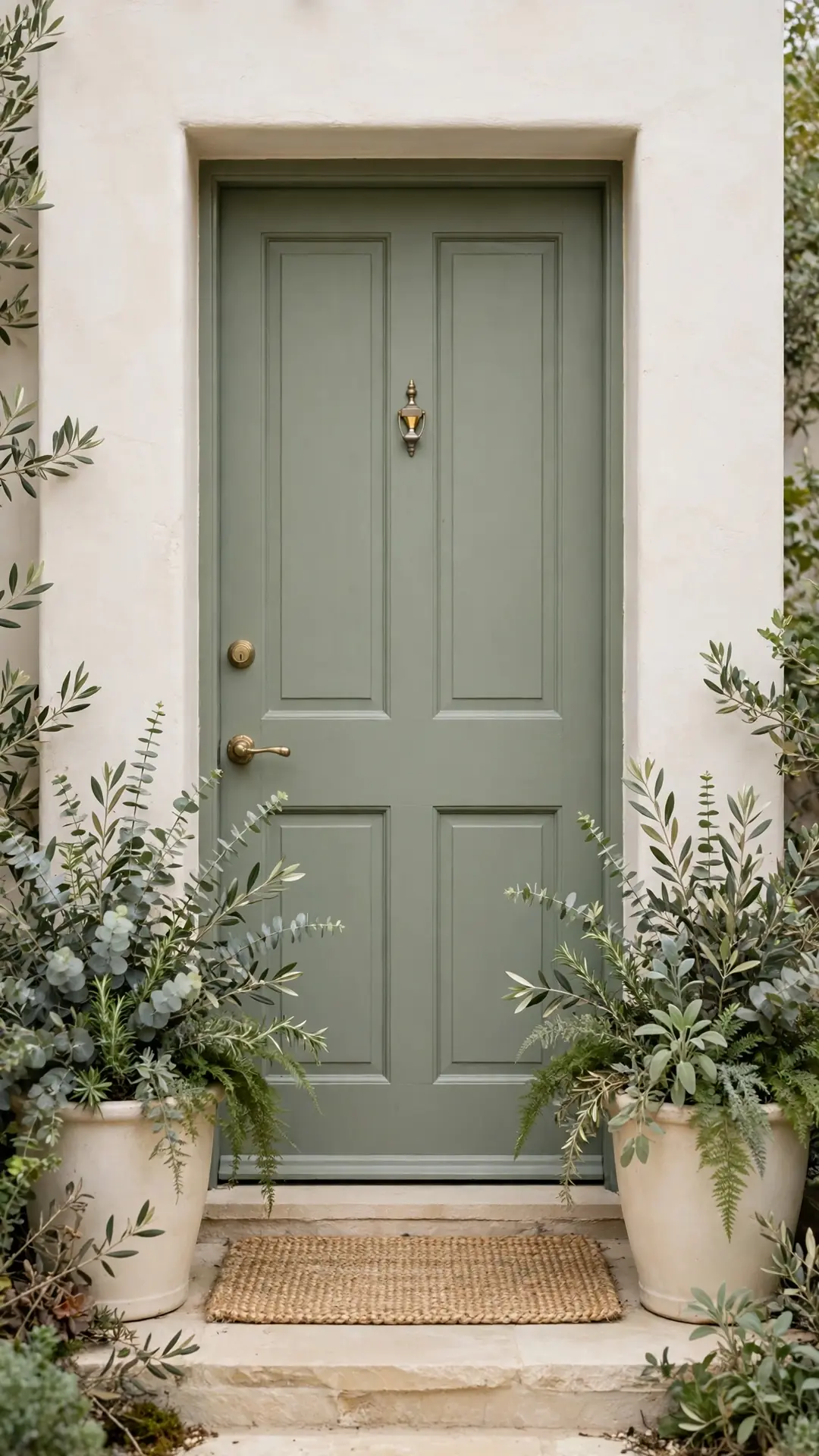
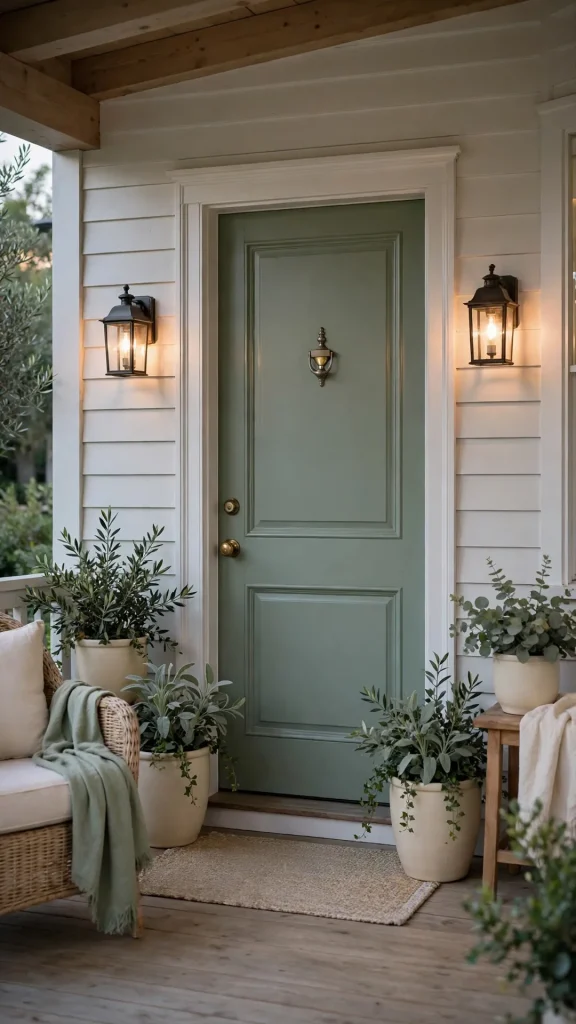
A sage front door is the simplest way to set a muted tone, because it is calm without being cold. Unlike a bright colour, it does not shout for attention, and unlike white, it does not show every mark. Paired with cream planters on either side, it creates a soft frame that feels welcoming in all seasons. I chose planters in the same warm cream, so the eye moves gently from the door to the plants and back again, without any jarring contrasts.
The plants matter, too, but not in the way I first thought. I used to fill planters with whatever was in flower, which meant the porch looked different every month and often a little chaotic. Now I keep it simple: soft greenery, a little trailing foliage, and one or two evergreens for structure. The porch looks cared for all year, and I spend far less time swapping plants in and out.
If repainting the door feels like a big step, start with the planters. Two cream pots and a sage-painted step or a sage wreath can give you the same feeling on a smaller scale, and you can build from there when you are ready.
2. A simple bench and layered doormat
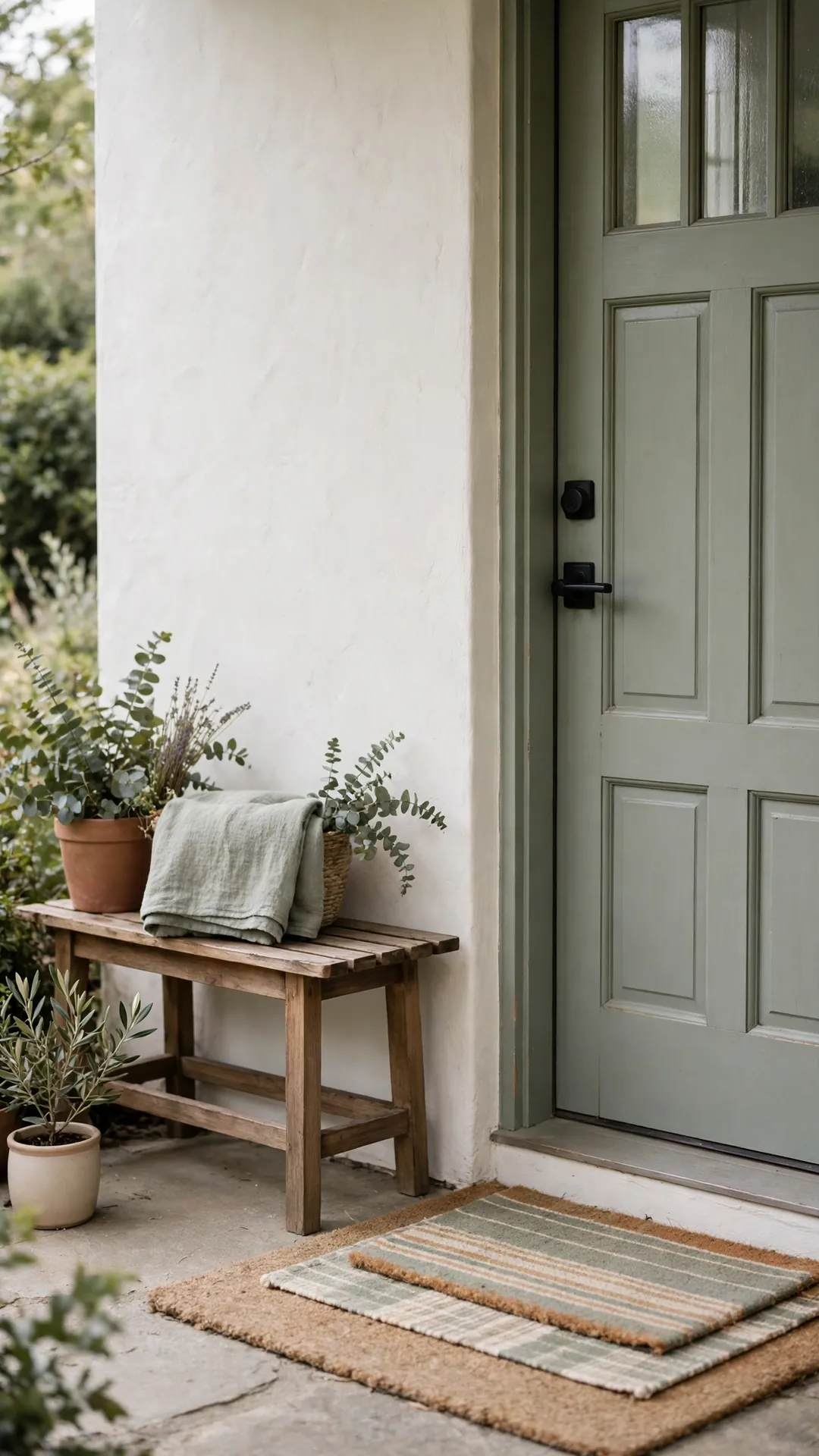
A bench changed how we use our porch. Before, it was just a place to pass through. Now it is a place to pause: to sit for a moment with a coffee, to put on shoes without balancing on one foot, to set down bags while I find my keys. A simple wooden bench in a natural or muted tone does this without adding visual clutter, and it gives the porch a sense of purpose.
Layering the doormat underneath it adds another quiet layer of texture. I use a larger, natural coir mat as the base and a smaller, softer mat on top in a muted pattern. It sounds like a small detail, but it makes the entrance feel finished, like a hallway rug rather than an afterthought. It also keeps dirt outside, which is a practical bonus in wet weather.
The key is to keep the bench mostly clear. One cushion in a muted tone, or a folded throw in cooler months, is enough. The moment a bench becomes a storage shelf, the calm feeling disappears, so I try to keep it as a seat first and a surface second.
3. Warm lantern light and evergreen greenery
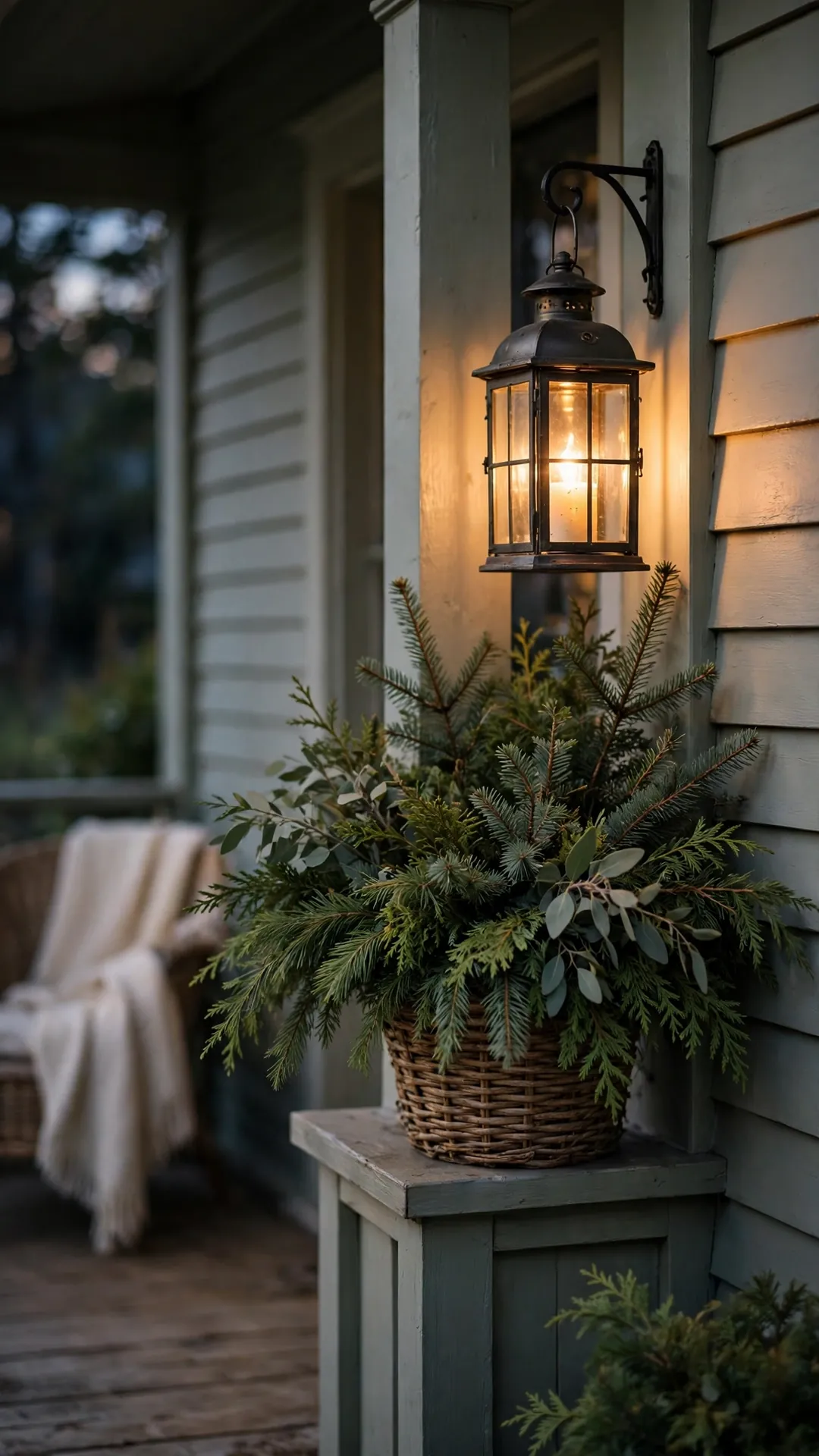
Light is what turns a porch from a daytime feature into a welcome home in the evening. I swapped a harsh overhead bulb for warm lanterns, one on either side of the door or one on the bench and one by the step. At dusk, the porch glows softly instead of glaring, and coming home feels like arriving somewhere rather than just unlocking a door.
Evergreen greenery does the same job through the year. While seasonal flowers come and go, evergreens keep the porch looking alive in January as well as June. I keep a small evergreen in a cream pot near the lanterns, and a trailing plant that softens the edge of the bench. Together with the warm light, they make the porch feel cared for even on the darkest evenings.
If you only try one of these ideas, try the light. It is inexpensive, it takes minutes to change, and it transforms how the whole house feels when you arrive home after dark.
Mistakes to avoid
It is easy to undo a muted porch by adding too much. Too many colours, too many patterns, or too many small ornaments can make a small space feel busy rather than calm. Another common mistake is choosing planters that are too small for the door, which makes the entrance look out of proportion. And do not forget the evening: a porch that looks lovely at noon can feel unwelcoming after dark if there is no warm light to guide you in.
Frequently asked questions
What if my porch is very small?
Choose just one idea and scale it down. A single cream planter and a small lantern can soften a tiny porch without crowding it, and a slim bench or even a single chair is enough to give the space a place to pause.
What colours work best for a muted porch?
Soft sage, warm cream, pale grey and natural wood work beautifully together because none of them compete. Pick one main colour for the door, one for the planters, and let greenery be the only strong colour in the space.
How do I keep the porch looking calm through winter?
Use evergreen plants, keep the bench clear, and rely on warm lantern light in the evenings. A porch that is simple in summer will stay simple in winter, because there is less to tidy and less to replace.
A calmer welcome, every day
I still pause on our porch most evenings, even if it is only for a few seconds. It is not a showpiece, and it was never meant to be. It is simply a soft, quiet welcome home, and that small calm at the door makes the rest of the house feel calmer too.

About the author
Hi, I'm Alia. I write about calm, muted homes that still feel lived in — better light, softer colours, and simple ideas that work on a real budget, learned in my own small home.