
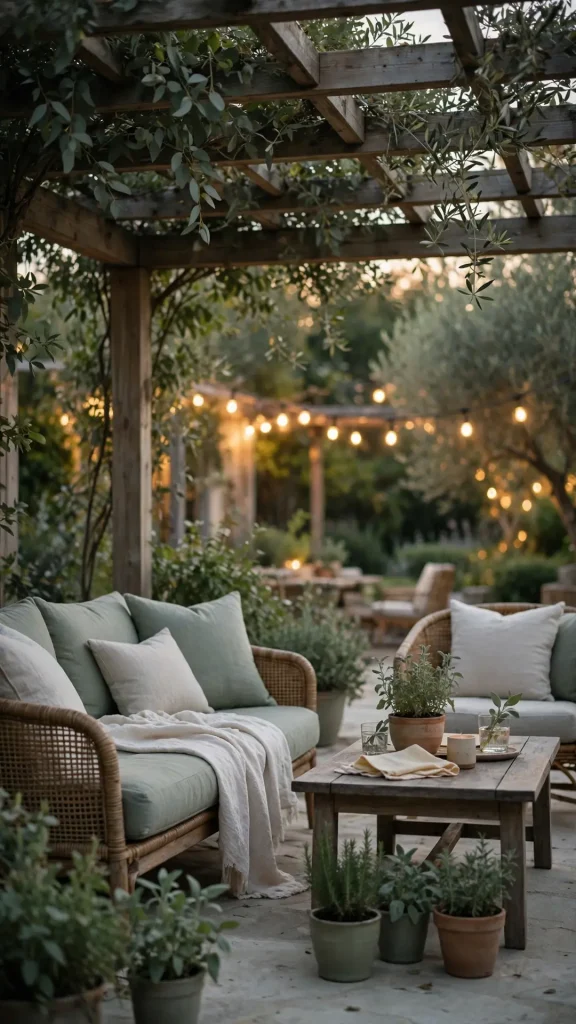
A Muted, Modern Exterior That Feels Like Part of the House
The outside of a house is usually where good intentions go to fade. A chair left out in the rain, a pot with nothing in it, a light so bright it makes the whole patio feel like a car park. Inside, the rooms are calm and considered; outside, it is whatever survived the weather.
It does not take a large garden to fix that. Most muted, modern exteriors work for the same reason muted interiors do: fewer colours, materials that can handle the weather, and one clear place to sit. Treat the outside as another room — just one with a sky for a ceiling — and the decisions get much easier.
Here is the version I would build again, whether the space is a small balcony, a patio, or a front step.
1. Start with a muted palette, and give every colour a job
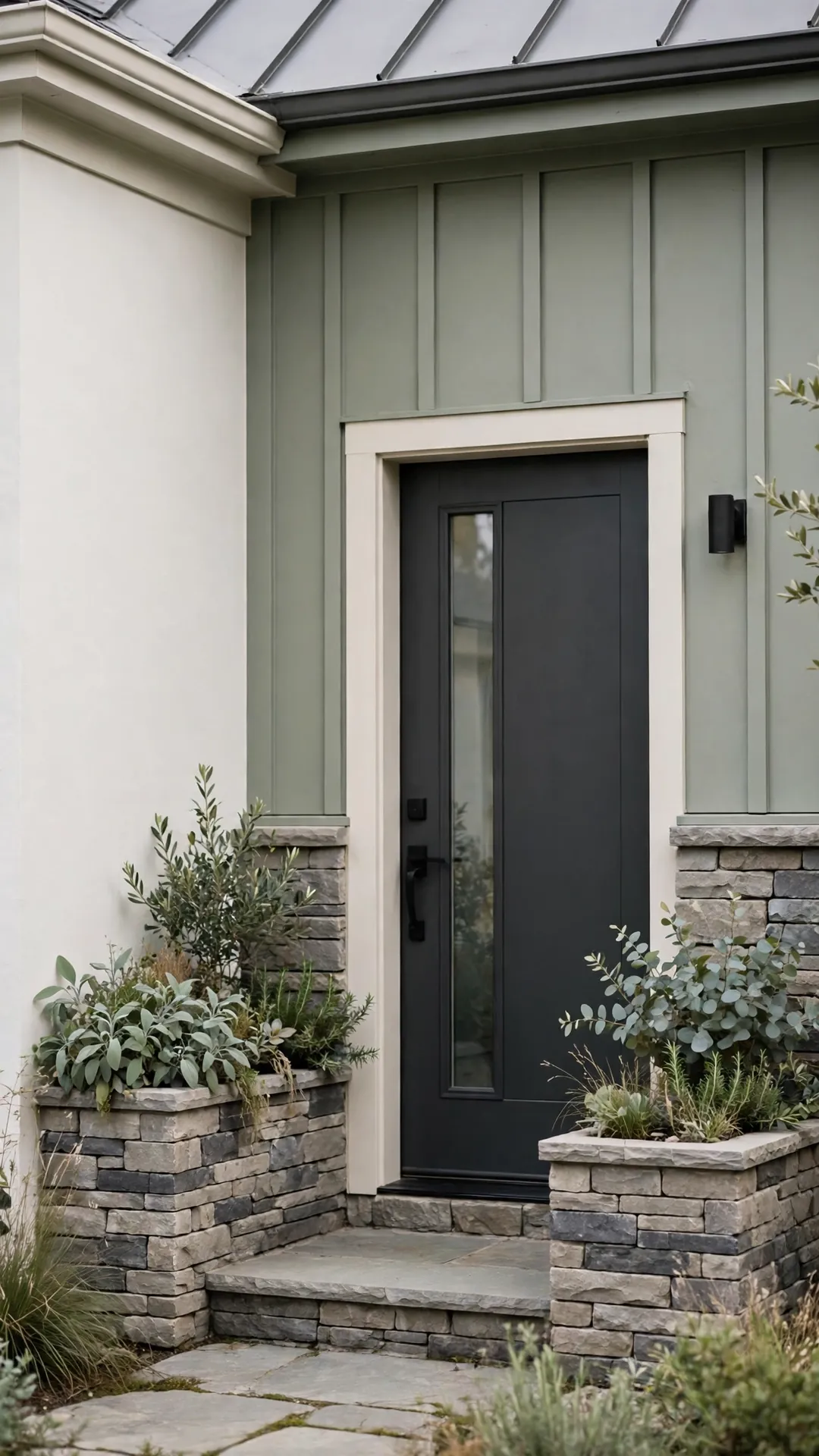
A muted exterior fails when it is just one flat colour, or when every new pot and cushion adds a new bright shade. It works when each colour has a clear role, and the plants are allowed to be the liveliest thing in the space.
Try this four-colour recipe:
- Warm white for walls and paintwork. Not stark, blue-white — that can glare in strong sun. A warm white with a hint of cream keeps walls bright at midday and soft in the evening.
- Sage for calm. Use it on planters, a painted bench, or outdoor cushions. Sage sits naturally next to green leaves without competing with them, which is why it works outside as well as it does inside.
- Stone or warm grey for grounding. Stone tiles, gravel, a concrete planter, or natural wood decking stops the space from looking washed out. This is the colour that makes the space feel built, not just decorated.
- Charcoal for definition. Just a little — a metal chair frame, a lantern, a door handle, or the edge of a planter. Charcoal gives the eye somewhere to land, so the soft colours and the greenery do not blur together.
Put the permanent colours first — walls, floor, and any fixed furniture — then bring the changeable colours in through cushions, pots, and throws that can come inside in bad weather. That way, a cushion you tire of next year is not a repainting job.
A quick test before you commit: look at any paint or fabric in full sun, in shade, and in evening light. Muted colours shift outdoors more than they do inside, and a shade you love at noon can look cold and grey at dusk.
2. Seating first — spend where you sit, save where you look
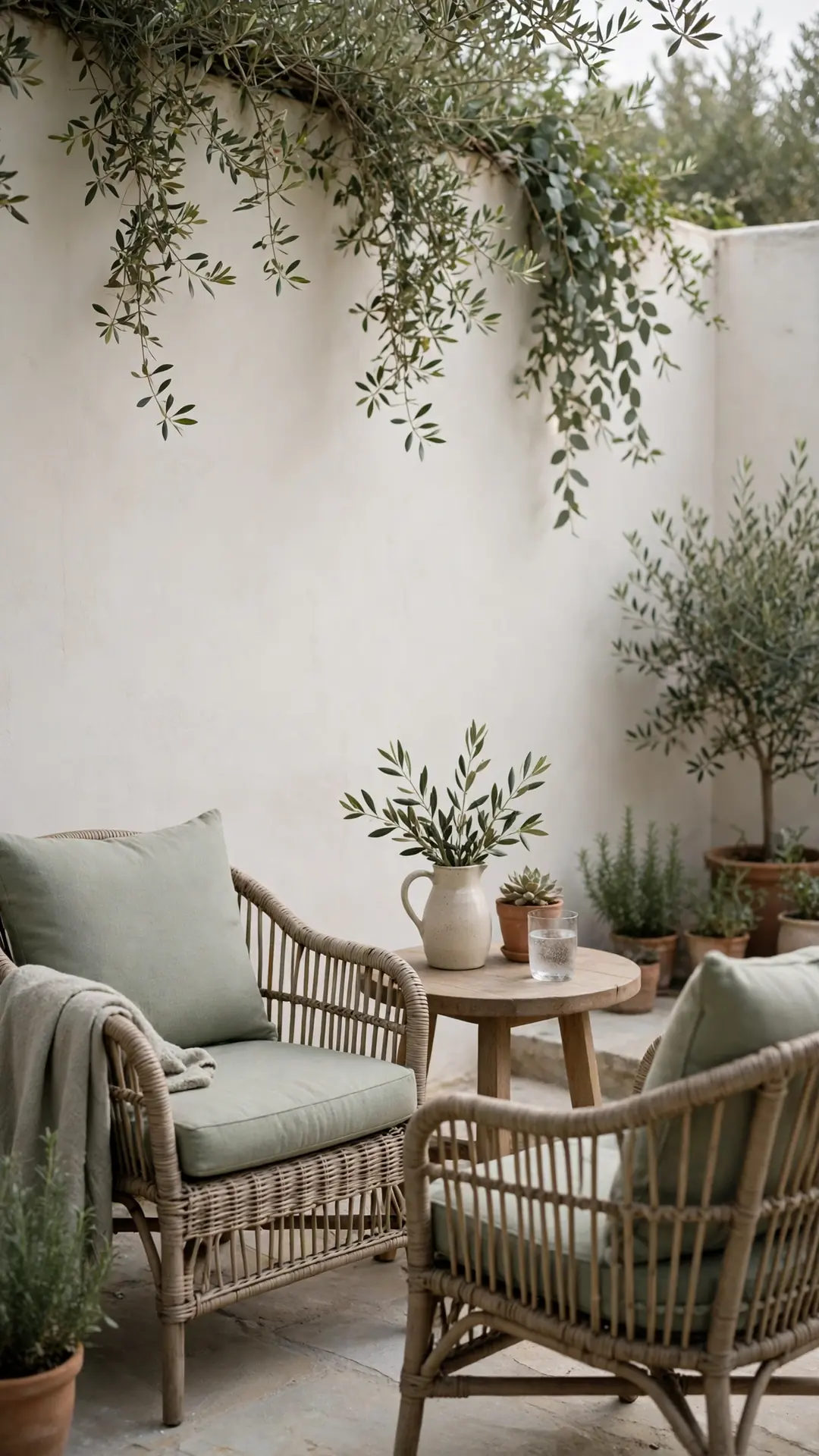
An exterior space is only used if there is somewhere genuinely comfortable to sit. A beautiful patio with an uncomfortable chair is a corridor, not a room.
Spend on: one good seat — a chair, bench, or small sofa that is made for outdoors, with a cushion you can actually sit on for an hour. If you have room for two seats and a small table, that is the ideal: somewhere to sit, and somewhere to put a cup down within reach.
Save on: the decorative layer. One outdoor throw for cool evenings, one or two cushions in sage or stone, and a small side table are enough. You do not need a full matching set to make a balcony look finished — in fact, a matching set that nobody sits in is the outdoor version of six unused cushions on a bed.
Arrange seating the way the living-room ideas do: angled slightly towards each other, not in a straight line facing a wall, so conversation is easy. If you missed those ideas, they are here: 15 living room marble coffee table décor ideas
If the space is tiny, choose one chair and one folding side table over two chairs nobody can move around. A small space that is easy to use will be used far more than a crowded one that looks good in a photo.
3. Shade, then light — in that order
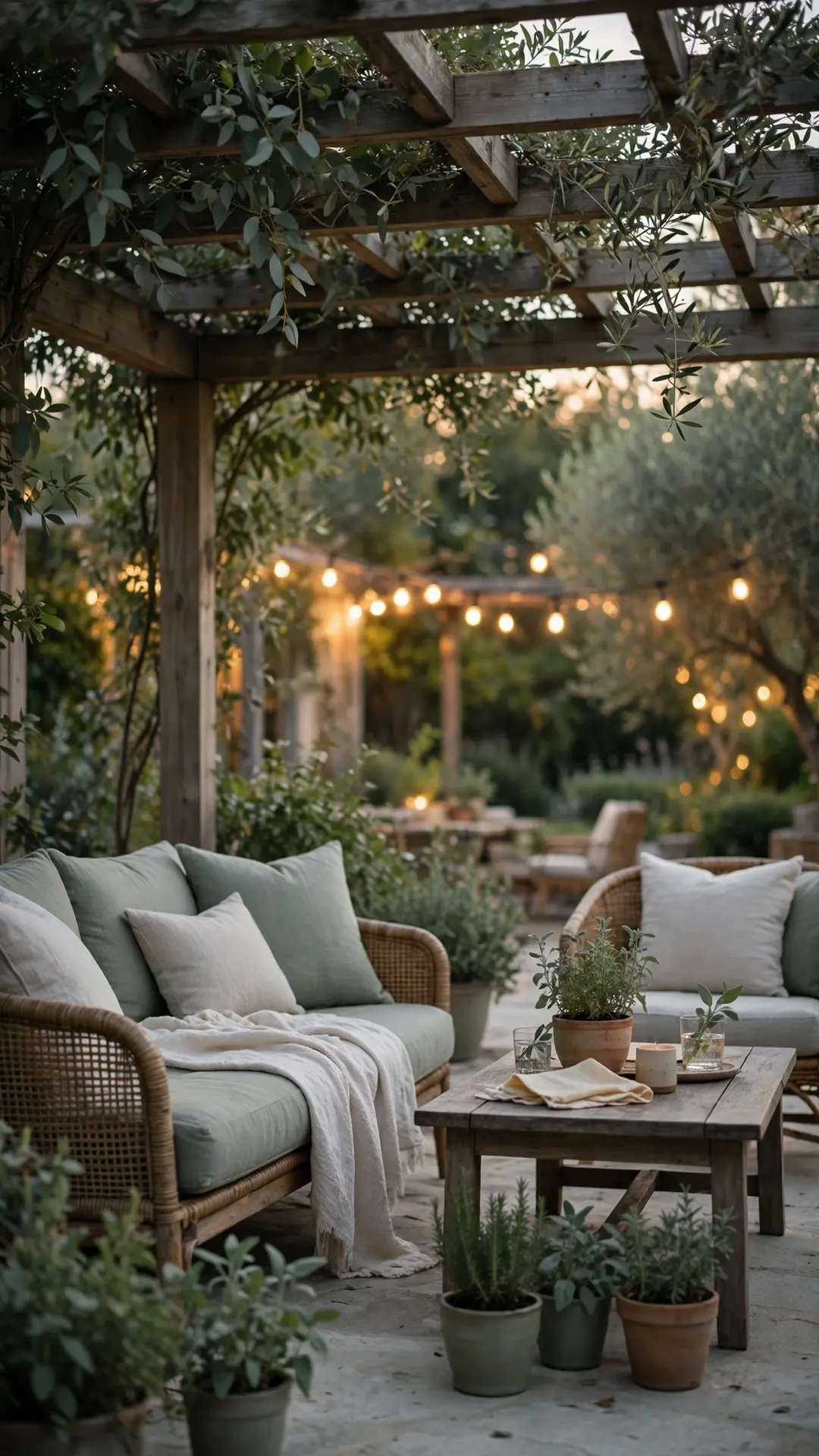
People do not avoid balconies because they dislike being outside. They avoid them because at 2 p.m. there is nowhere to sit out of the sun, and at 9 p.m. there is nowhere to sit in decent light.
Shade first: a simple umbrella, a shade sail, or a pergola with a climbing plant will do more for daily use than any furniture. Place it over the seating, not over the whole space — you want a shaded seat and a sunny patch, so the space works at different times of day.
Light second, warm and low: one bright overhead light is the enemy of a calm evening outside, just as it is inside. Build a low, warm layer instead — lanterns, a string of warm-white lights, or a small table lamp rated for outdoor use. Keep it warm white, around 2700K, not cool daylight, and keep the brightest light off the seating itself so faces are lit softly, not interrogated.
One budget swap that makes a real difference: solar lanterns or a rechargeable outdoor lamp cost little, need no wiring, and can be moved to wherever you are actually sitting. If you cannot wire a dimmer outside, a lamp with two or three brightness settings gives you most of the effect.
4. Plants and storage that survive real weather
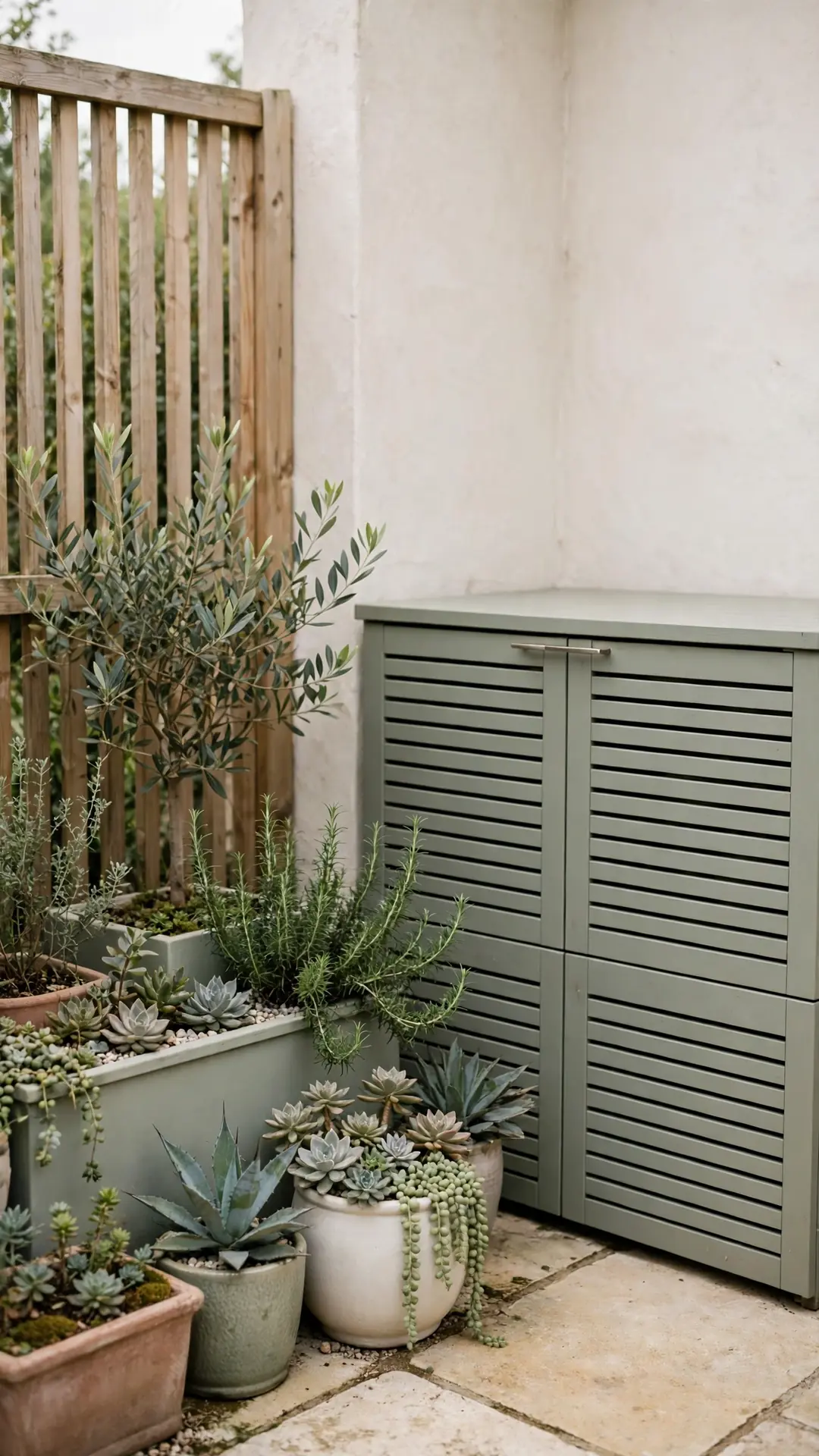
Plants are the texture of an exterior room, but they need to be chosen for the conditions they will actually live in — sun, wind, and how often they will realistically be watered.
The closed-storage rule, outdoors: most outdoor things should live in one closed place. A storage bench, a weatherproof box, or a lidded basket for cushions, throws, and small tools will do more for calm than any colour scheme. If cushions have to be carried inside every night, they will stop being used; if they have a dry box by the door, they will be used every evening.
The one-statement-plant rule: allow yourself one larger plant or one generous planter as the anchor — an olive tree in a pot, a large grass, or a climbing plant on a trellis. Around it, keep the rest simple and repeatable: the same pot in two or three sizes, the same green, rather than ten different plants in ten different pots. Repetition is what makes an exterior feel designed rather than collected by accident.
Two practical fixes that help immediately: a doormat and a small tray by the door for shoes, so outdoor dirt does not travel inside, and a watering can that lives by the plants, not in a garage you have to walk to. Small frictions are what kill outdoor habits.
5. Three common mistakes to avoid
Too many colours. A muted exterior with five bright cushion colours is not muted anymore. Pick your four colours, and repeat them. Let the plants provide the variation.
Furniture that cannot handle the weather. Indoor cushions, untreated wood, and metal that rusts will look tired within one season, and a tired exterior is worse than a plain one. Check the label: if it is not rated for outdoor use, it belongs inside, however good it looks in the shop.
No transition from inside to outside. A patio that starts abruptly at the door feels separate from the house. Repeat one thing from the room next to it — the same warm white, the same sage, the same wood tone — and the two spaces start to read as one home. This is the same thinking behind the calm bedroom ideas: repeat colours and materials, and the room feels intentional.
A small-budget makeover checklist
If you want to start this weekend, do it in this order:
- Remove everything broken, faded, or unused from the space, and sweep or wash the floor.
- Put one good seat where it gets shade in the afternoon and warm light in the evening.
- Add shade over that seat — an umbrella is the cheapest start.
- Add one closed storage solution — a storage bench or weatherproof box for cushions and throws.
- Plant one larger anchor plant, in a pot that matches your palette, where you will see it from inside.
- Add one warm light source — a lantern or string lights — and stop there.
- Live with it for a week before buying anything else, and notice which corner you actually sit in.
You may find, as I did, that steps one to six already change how the space feels — and that the urge to fill every corner fades once there is one good place to sit.
FAQ
Can a muted exterior still feel warm?
Yes, if you use warm whites, natural wood, and texture. Coldness usually comes from cool white paint, grey light, and hard surfaces with nothing soft or green to balance them — not from the muted palette itself.
Do I need a large garden for this to work?
No. A balcony with one chair, shade, and one good plant follows exactly the same rules as a large patio. Small spaces reward restraint more than large ones do, because every extra item is more visible.
What if my exterior gets very harsh sun or rain?
Choose materials for that reality first: shade cloth or a solid umbrella for sun, and furniture and fabrics rated for outdoor use for rain. Bring cushions and throws into their storage box in bad weather, rather than buying replacements every season.

About the author
Hi, I'm Alia. I write about calm, muted homes that still feel lived in — better light, softer colours, and simple ideas that work on a real budget, learned in my own small home.