How to Thrift Home Decor That Actually Looks Modern
I still remember the vase that changed how I shop. It was sitting on a crowded shelf in a charity shop, dusty, priced at less than a takeaway coffee, and easy to walk straight past. It was not shiny, it was not perfect, and it did not match anything I already owned. But its shape was simple, its colour was a soft, muted green, and it felt solid in my hands.
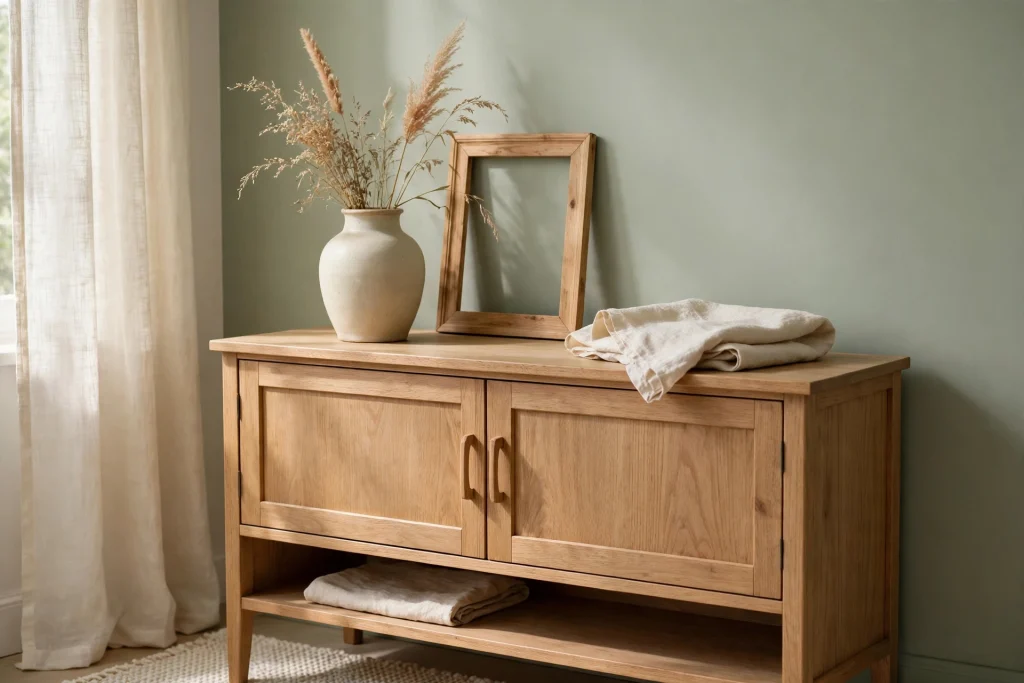
I took it home, washed it, and placed it on our sideboard with nothing else except a few dried grasses from the garden. Suddenly the whole corner looked calmer. Nothing else had changed. The wall was the same, the sideboard was the same, and the light was the same. Yet that one quiet piece made the room feel finished, as if someone had finally decided what the room was meant to be.
That changed how I shop. Modern does not have to mean new or expensive. It can mean simple shapes, soft colours, and pieces with room to breathe — bought with a plan and given a proper place at home.
If you have ever brought home second-hand finds that looked wonderful in the shop but odd together at home, you are not alone. This is the calmer method I use now.
1. Decide your muted palette first
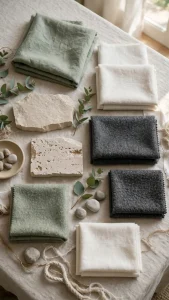
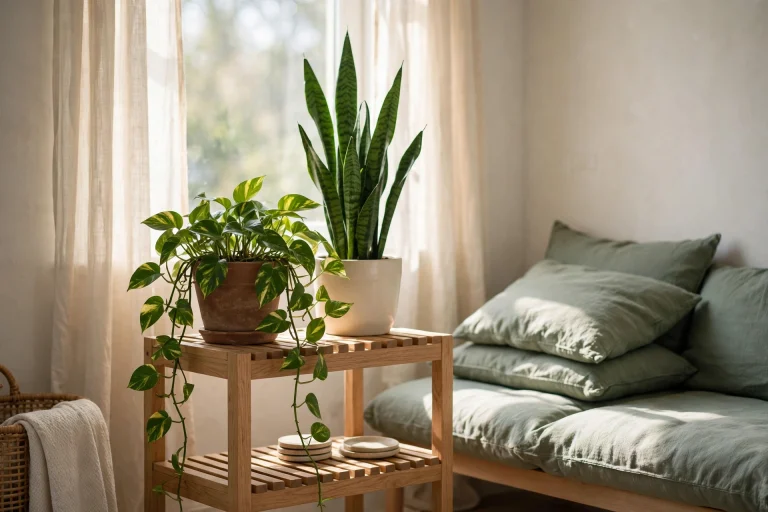
Before you visit a single shop, decide on three colours you will allow into the room. For a muted, modern home, that usually means one soft neutral, one gentle green or grey, and one warm natural tone. Mine are cream, sage green, and warm wood. Everything else has to earn its place by sitting comfortably beside those three.
This one decision makes thrifting much easier. When the shelves are full of bright patterns, shiny gold, and mixed colours, a palette gives you a kind filter. You can admire a bold orange lamp without feeling you must take it home. You can pass a pretty but clashing cushion without guilt. You are not looking for everything beautiful. You are looking for what belongs in your room.
It also helps across different places. A charity shop, a flea market stall, and an online listing will all look different, but your palette stays the same. Keep a photo of your room on your phone, and ask one question: will this soften the room, or shout over everything else?
For one trip, and for one room, keep the palette steady. That steadiness turns a random collection into a calm, modern look.
2. Make a short hunt list

A hunt list is not a long shopping list. It is a short note of the gaps in your home, written before excitement takes over. I usually allow myself no more than three things. For example, my list might say: one medium vase for the sideboard, one wooden frame for a print I already own, and one small tray for the coffee table.
Writing the list at home helps because you can check what you already have. Look at the shelf that feels empty, the wall that feels bare, and the table that always collects clutter. Notice the sizes too. A vase that is too tall for a low shelf will never look right, no matter how beautiful it is. A tray that is too large for your coffee table will make the whole table feel crowded.
When you arrive, start with your list, not the most colourful aisle. If you find something unexpected that fits your palette and fills a real gap, that is a happy bonus. If it does not fill a gap, leave it for someone else.
I also note what I am not looking for. No more candle holders until the ones at home are used. A short list protects both your budget and your space.
3. Check quality and size before buying
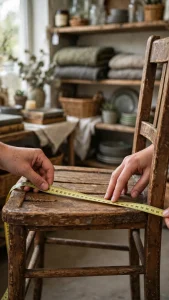
Second-hand shopping rewards a slow, practical check. Before you fall in love with a piece, pick it up, turn it over, and look closely. Is it chipped in a place that will always catch your eye? Does a drawer stick? Does a frame have a broken corner that cannot be hidden? A little wear can add character, but damage that bothers you on day one will bother you even more after a month.
Weight often tells a useful story. A solid ceramic vase or sturdy wooden bowl feels grounded, while a very light copy can feel thin and temporary at home. Trust your hands and eyes, and ask whether the piece will still feel good after daily use.
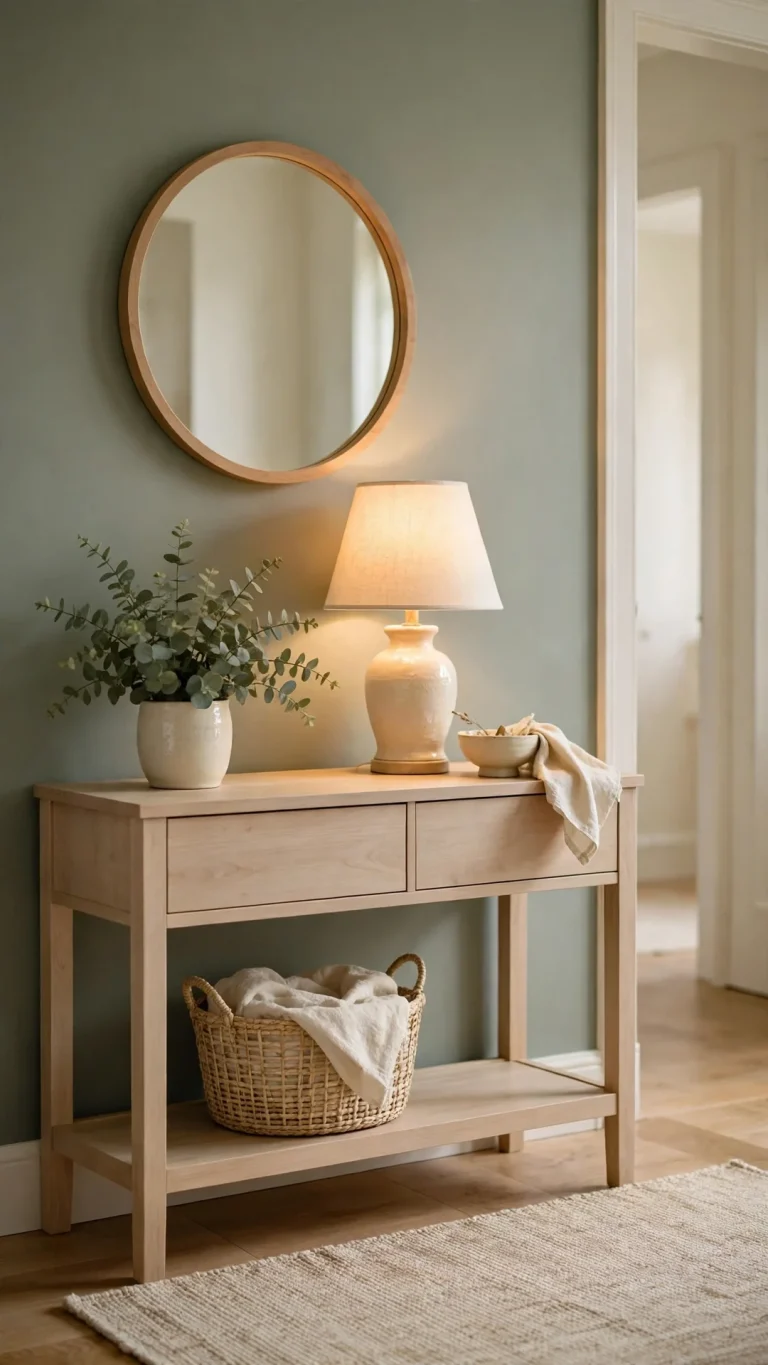
Size matters just as much as quality. I always carry a small tape measure, or I check the measurements on my phone before I go. Measure the shelf, the table, or the wall space first, and write those numbers on your hunt list. A beautiful mirror that is slightly too wide for the wall above a chest of drawers will look awkward, while the same mirror in the right size can open up the whole room.
For online finds, ask for clear photos of the back, base, and any marks, and confirm measurements in writing. A bargain that does not fit becomes another thing to store or pass on again.
4. Clean, repair or paint simply
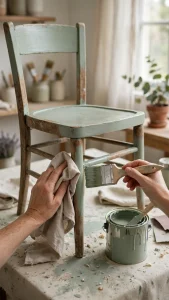
When a thrifted piece comes home, give it a fresh start before you style it. Wash ceramics and glass in warm, soapy water. Wipe wood with a damp cloth and let it dry fully. Shake out baskets and textiles outside, and wash linen or cotton covers where the care label allows. This simple reset often makes a piece look completely different. Dust and old shop smells can hide a lovely shape.
Small repairs are usually enough. Tighten a loose screw, glue a wobbly leg, or replace a missing felt pad. You only need to make it safe, steady, and pleasant to touch. A little furniture oil can often soften scratches without changing the character of the wood.
Paint can help, but keep it simple: one muted colour, one even coat, and a matt or eggshell finish. Avoid painting over beautiful natural wood just because it is not perfect. Sometimes the grain is the best part, and a good clean is all it needs.
Let the piece dry and rest for a day if you can. If it still feels calm and useful, it is ready. If it still feels wrong, pass it on rather than forcing it into the room.
5. Style one thrifted piece at a time
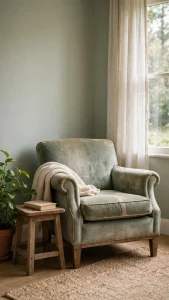
This is the step that changed my home the most. Instead of placing five new finds at once, I now style one piece at a time and live with it for a few days. I put the vase on the sideboard and leave the rest of the surface empty. I hang one frame and leave the wall around it quiet. I place one tray on the coffee table and remove anything that does not belong there.
Modern rooms need empty space. That space is not wasted. It lets your eye rest, and it lets the piece you chose actually stand out. When every surface is covered, even beautiful objects start to look like clutter. When one object has room, it looks intentional, and the room feels larger and calmer.
After a few days, you will know whether it works. Does it catch the morning light nicely? Does it still feel right in the evening? Does it finish the corner, or compete with something else? If you still want more, add one piece slowly, in the same palette but a different material or shape.
This slower styling also helps you appreciate what you already own. A thrifted vase beside a plant you have had for years feels personal in a way a matching shop set rarely does.
What to skip
Not every second-hand find is a good find, even when the price is tempting. Here are the pieces I usually leave behind.
- Anything that needs a major repair, smells strongly after cleaning, or feels unsafe, such as a wobbly chair or a damaged electrical lamp.
- Pieces in colours outside your palette that you are buying only because they are cheap or unusual.
- Duplicates of things you already own but are not using, especially small ornaments and extra candle holders.
- Very large statement pieces that have no measured place in your home yet, even if they look impressive in the shop.
Skipping these is not a missed opportunity. It is how you protect the calm feeling you are working towards.
A calmer way to shop second-hand
Thrifting well is not about finding the most, the fastest, or the cheapest. It is about choosing slowly, checking honestly, and styling simply — with a calm palette, a short list, and room for each piece to breathe.
The next time you walk into a charity shop or scroll through second-hand listings, try this slower approach. You may come home with less, but what you bring home is far more likely to stay, to suit your room, and to make your home feel modern in the quiet, lived-in way that lasts.
Quick checklist
- Choose three muted colours for the room before you shop.
- Write a hunt list of no more than three real gaps.
- Measure the space and check quality, weight, and damage.
- Clean, repair, or paint simply, then let the piece rest.
- Style one piece at a time and leave empty space around it.
- Skip anything outside your palette, damaged, duplicated, or unmeasured.

About the author
Hi, I'm Alia. I write about calm, muted homes that still feel lived in — better light, softer colours, and simple ideas that work on a real budget, learned in my own small home.