3 Sage Bedding Layers for a Bedroom That Feels Calm All Year
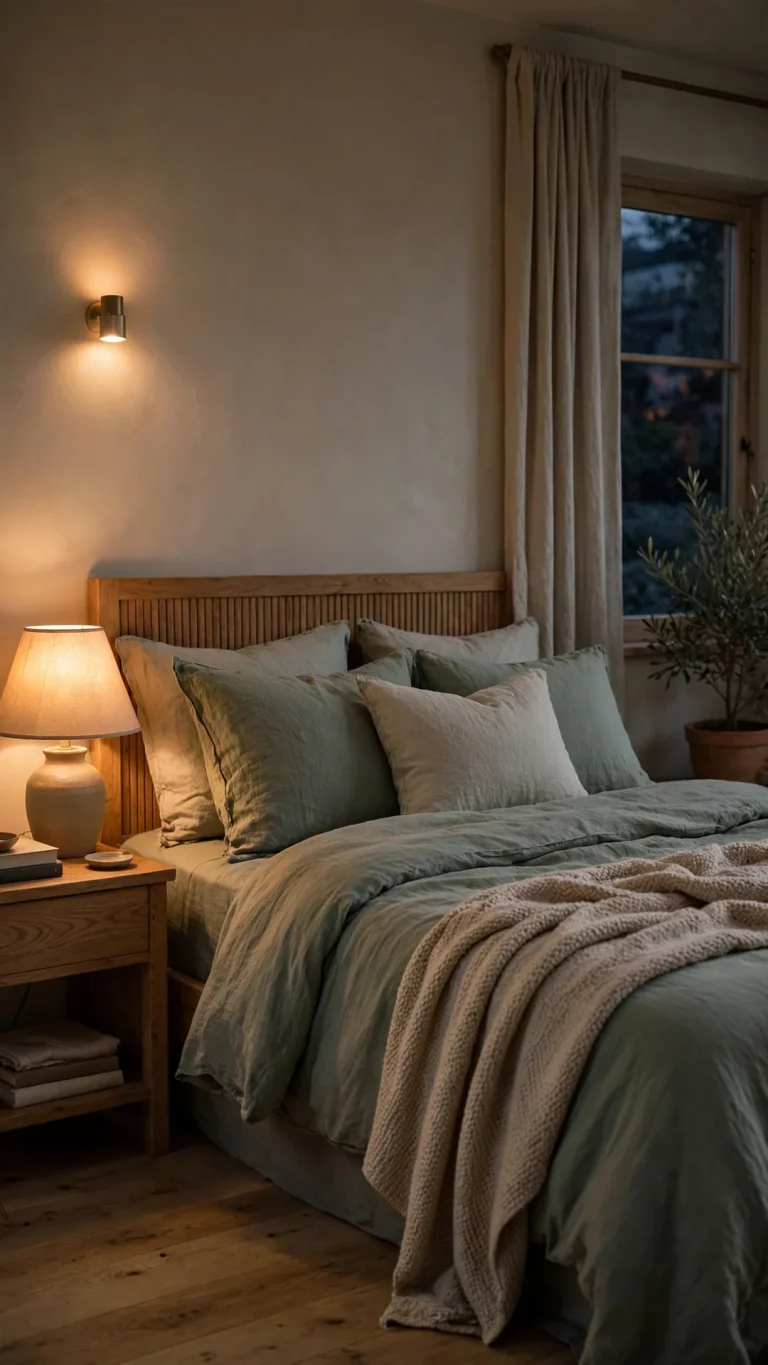
I used to think a calm bedroom needed a whole makeover. New furniture, new paint, a long shopping list. Then one slow weekend I changed just one thing: the bedding. I swapped a busy patterned set for soft sage linen, added a cream duvet, and finished with a couple of pillows I already loved. The room did not change, but the feeling of it did. It felt softer, quieter, easier to breathe in.
That is the idea behind this list. Three layers, nothing more. Each one is simple on its own, and together they make a bed that looks inviting every single day of the year — not dressed up for a season, just quietly calm. If your bedroom feels a little restless, start here. You do not need to buy everything at once; one layer at a time is enough.
1. Soft sage linen sheets as the base
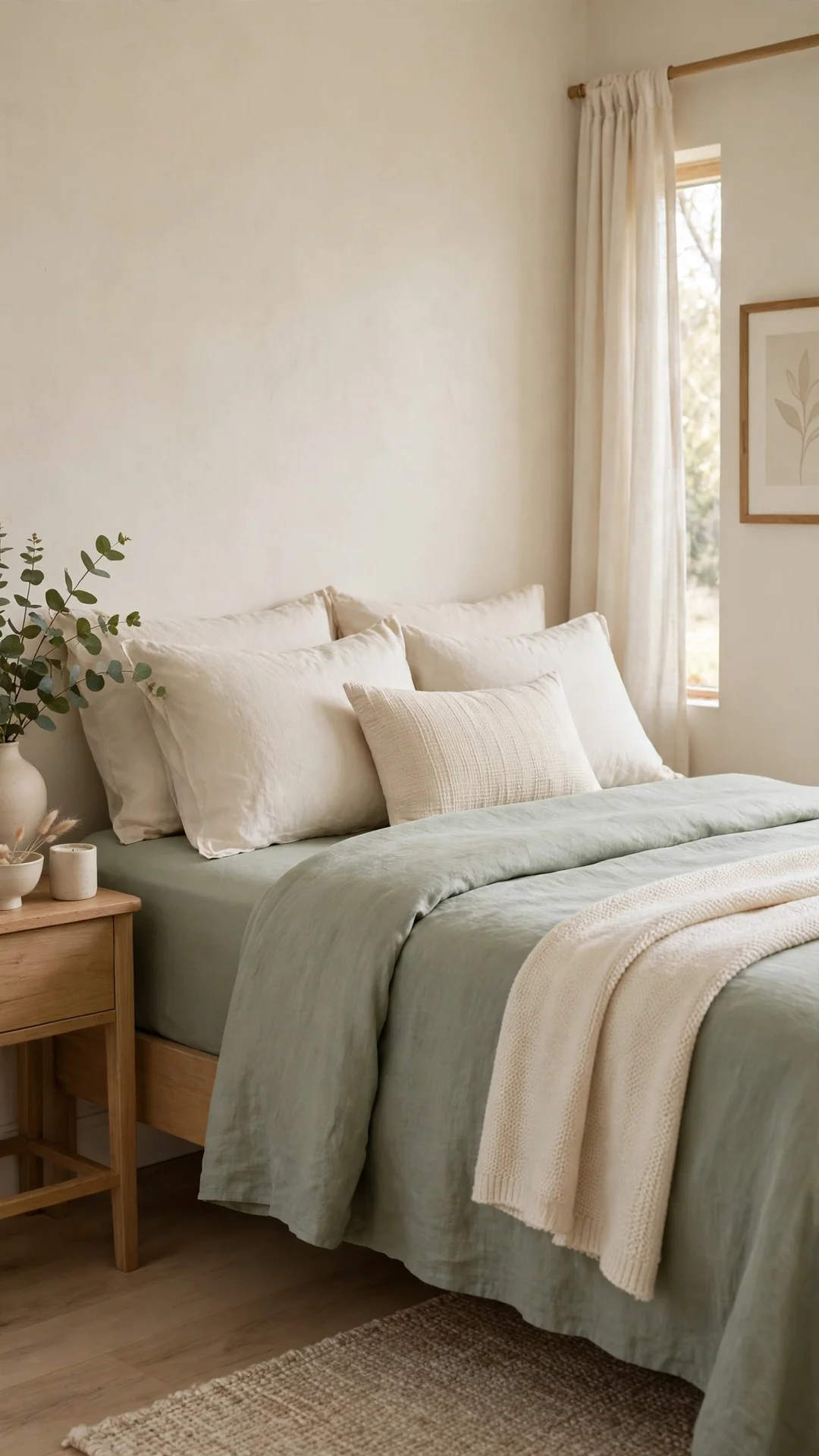
Everything starts with the sheets, because they are the layer closest to you. Sage linen has a gentle, washed-out green tone that feels restful without looking cold. It pairs beautifully with cream, white, and pale wood, so it never fights with the rest of the room. And unlike a bright colour, it does not demand attention — it simply sits there, calmly, doing its job.
Linen also feels wonderful to sleep in. It breathes well, so it stays comfortable on warm nights, and it layers nicely under a duvet when the nights turn cooler. I love the way it softens with every wash. Those first slightly crisp weeks give way to a relaxed, lived-in texture that no amount of ironing can fake — and honestly, I stopped trying to iron it a long time ago. A few natural wrinkles are part of its charm.
If you are starting from scratch, choose a plain sage fitted sheet and pillowcases first, and keep the rest of the bed neutral while you get used to the colour. You will quickly see whether sage feels like home to you. In my experience, it does — it is the kind of colour that makes the whole room feel a shade quieter the moment the bed is made.
2. A cream duvet with a waffle throw
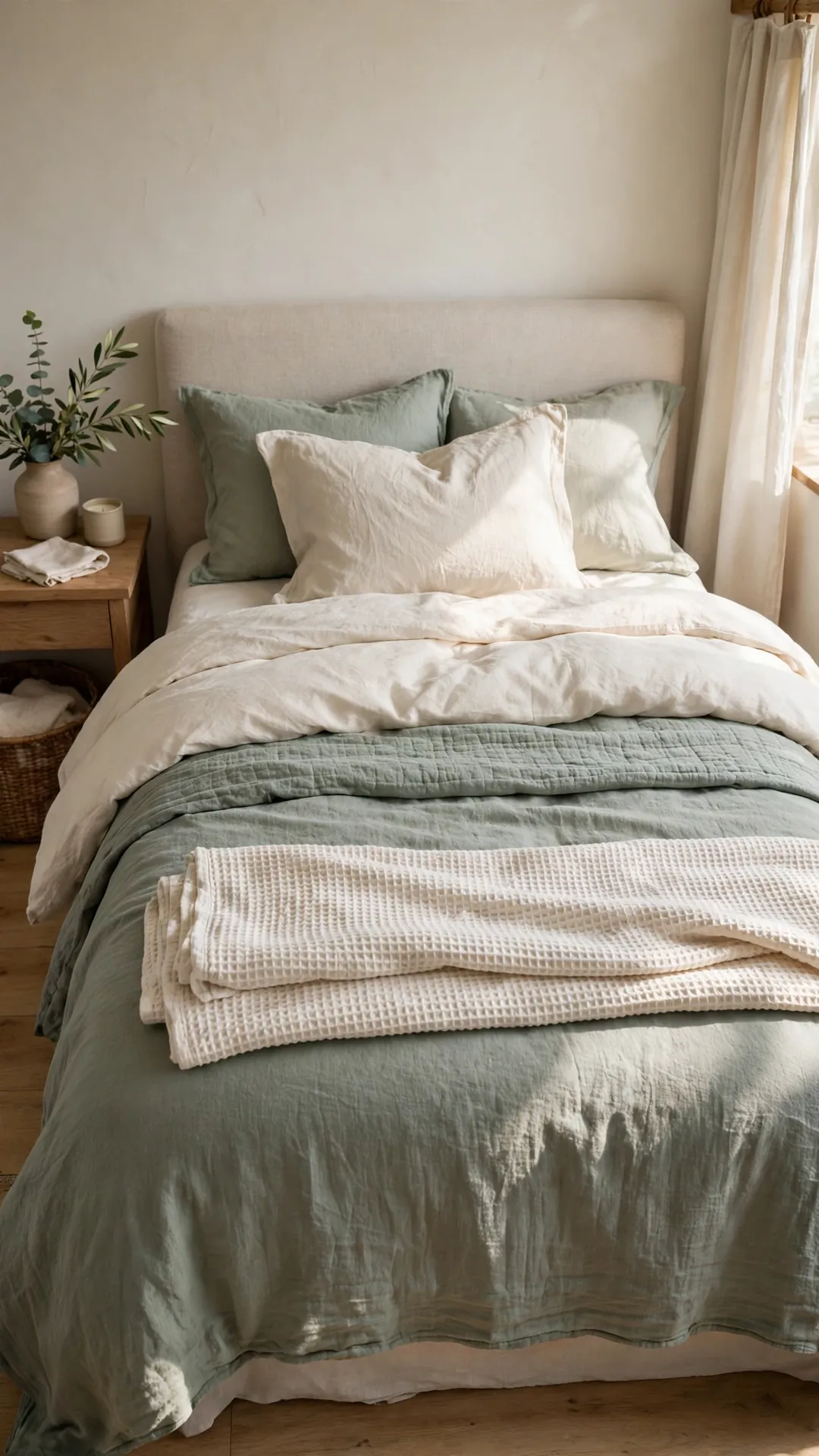
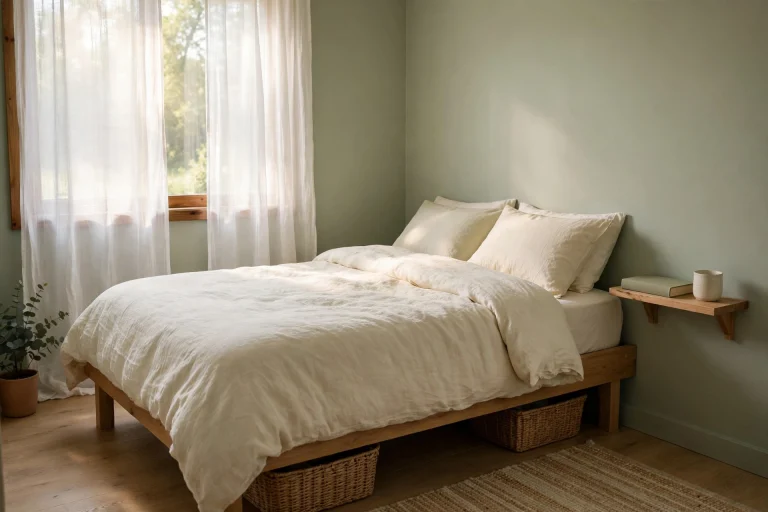
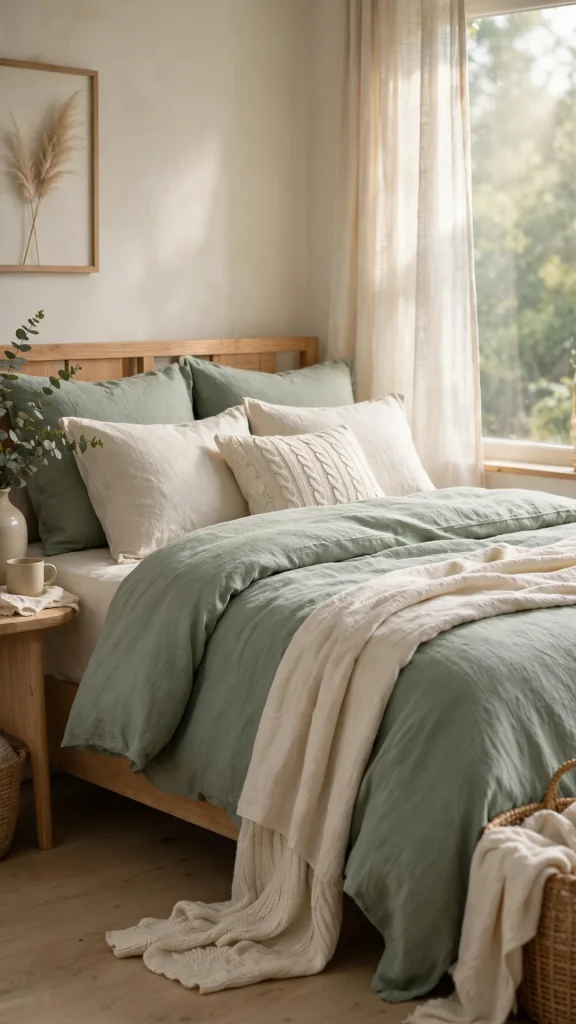
The second layer is where the warmth comes in. A cream duvet over sage sheets softens the green and keeps the bed looking light rather than dark. Cream is forgiving, too: it hides the everyday creases better than pure white, and it warms up a room that might otherwise feel too cool or too grey. Folded back a little at the top, it frames the pillows and makes the bed look finished without any fuss.
Then comes my favourite small touch: a waffle throw folded across the foot of the bed. The waffle texture adds just enough pattern to keep the bed interesting, without introducing a new colour or a busy print. It is also the most practical layer of all. On a mild evening, it is the extra warmth you reach for without unfolding the whole duvet. On a cooler night, it sits on top and adds real cosiness.
What I like most about this combination is how easy it is to live with. The duvet does the heavy lifting, the throw does the styling, and neither one needs careful arranging. Shake the duvet out, lay the throw across the foot, and the bed looks cared for. That five-minute routine, done every morning, is what keeps a bedroom feeling calm rather than chaotic.
3. A simple mix of sage and cream pillows
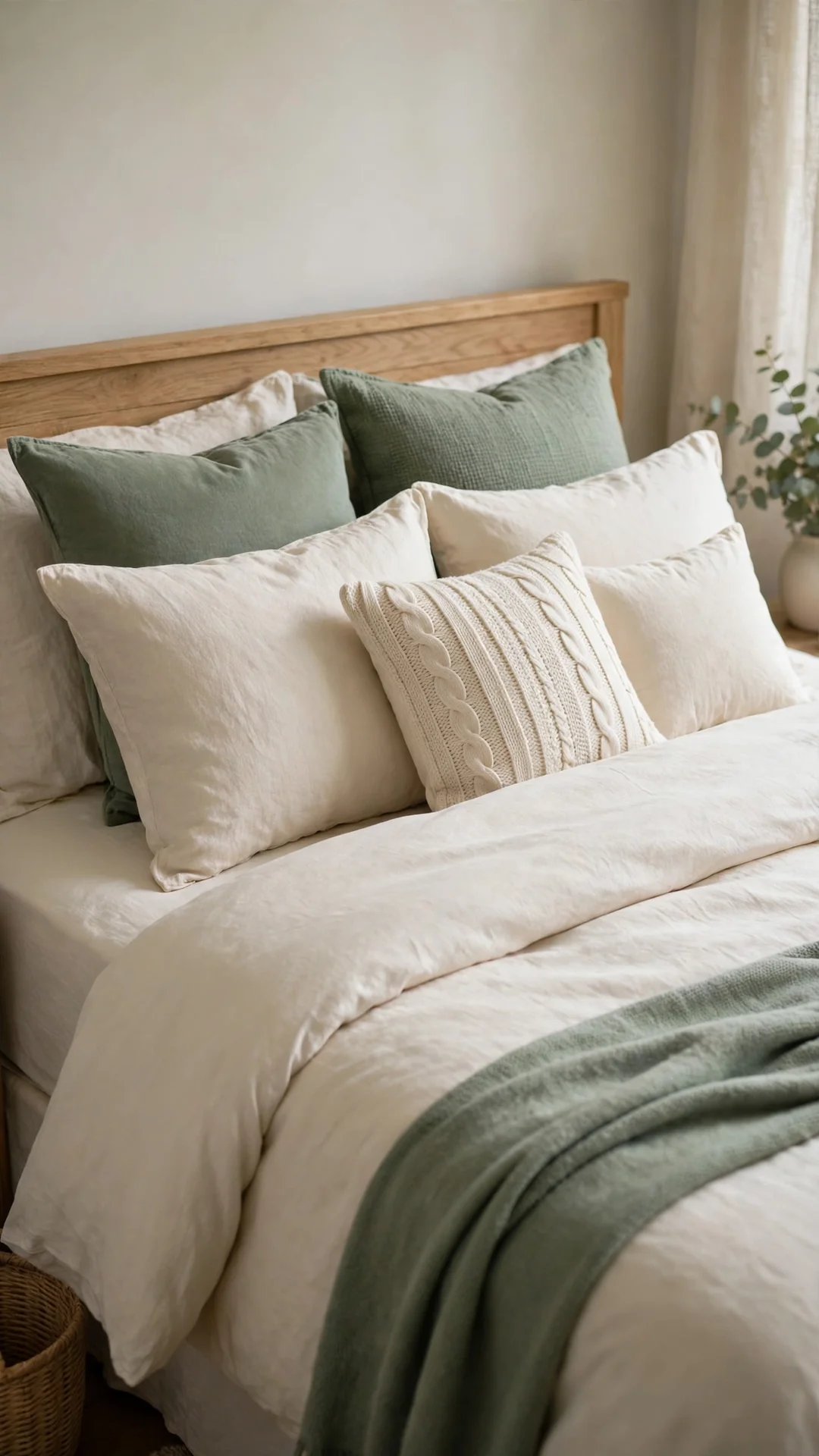
Pillows are where many bedrooms go wrong, because it is so tempting to keep adding more. I have learned that a simple mix works better: the pillows you actually sleep on, plus two or three in front, in sage and cream. That is enough to make the bed look layered and inviting, and few enough that making the bed never feels like a chore.
Start with your sleeping pillows in cream or white cases — they keep the head of the bed light and fresh. In front of them, add one or two sage pillows: a standard pillow, a square cushion, or a soft linen sham. The mix of the two colours ties the whole bed together, echoing the sheets below and the duvet above, so nothing looks like an afterthought.
The real test is the evening test. When you are tired and ready for bed, do the extra pillows take ten seconds to move, or do they end up on the floor in a heap? If they end up on the floor, you have too many. Keep only the ones you enjoy moving aside and putting back in the morning. A calm bedroom is not just about how the bed looks at noon — it is about how easy it feels at midnight, too.
Mistakes to avoid
Do not buy all three layers in the exact same shade of sage, or the bed can look flat and washed out. A little contrast — sage against cream, linen against waffle — is what gives the layers depth. Also, resist the urge to add a loud accent colour “just for interest.” One bright cushion can undo the whole calm feeling. And finally, do not choose fabrics you dread washing. If a layer is too delicate for your normal laundry routine, it will spend more time in the cupboard than on the bed.
FAQ
Can I use sage bedding all year round?
Yes. Sage is a soft, muted green that works in every season — it feels fresh in summer and grounding in winter, especially when paired with cream rather than a seasonal accent colour.
What colours go best with sage bedding?
Cream, soft white, warm beige, and pale wood tones are the easiest matches. They keep the room calm and let the sage stay the gentle focus of the bed.
How many pillows do I really need for a layered look?
Your sleeping pillows plus two or three decorative ones in front are plenty. The goal is a bed that looks inviting and is still quick to make every morning.
A calmer bed, a calmer morning
I still love the mornings when I walk past a neatly layered bed and feel the room exhale a little. Nothing dramatic changed in my bedroom — just three soft layers, in colours that do not shout. Sage sheets, a cream duvet with a waffle throw, and a simple mix of pillows. That is all it took for the bed to become the calmest corner of the house.
If you try this, start with one layer and live with it for a week before adding the next. Notice how the room feels, not just how it looks. A calm bedroom is not a finished project; it is a small daily habit, made one soft layer at a time.

About the author
Hi, I'm Alia. I write about calm, muted homes that still feel lived in — better light, softer colours, and simple ideas that work on a real budget, learned in my own small home.