Modern Bedroom That Actually Helps You Sleep
I used to walk into my bedroom and feel tired in the wrong way. Not sleepy — just overwhelmed. There were too many colours, too many patterns, and a chair that had quietly become a second wardrobe. The room was supposed to be the calmest place in the house, and it was the busiest.
So I started again, with one rule: if something does not help me rest, it does not earn a place in the room. That rule, more than any single purchase, is what made the difference. A muted, modern bedroom is not about buying everything in beige. It is about choosing fewer things, in colours that sit quietly together, and letting light and texture do the work.
Here is the version I would build again — room by room, decision by decision.
1. Start with a muted palette, and give every colour a job
A muted palette fails when it is just one flat colour everywhere. It works when each shade has a clear role.
Try this four-colour recipe:
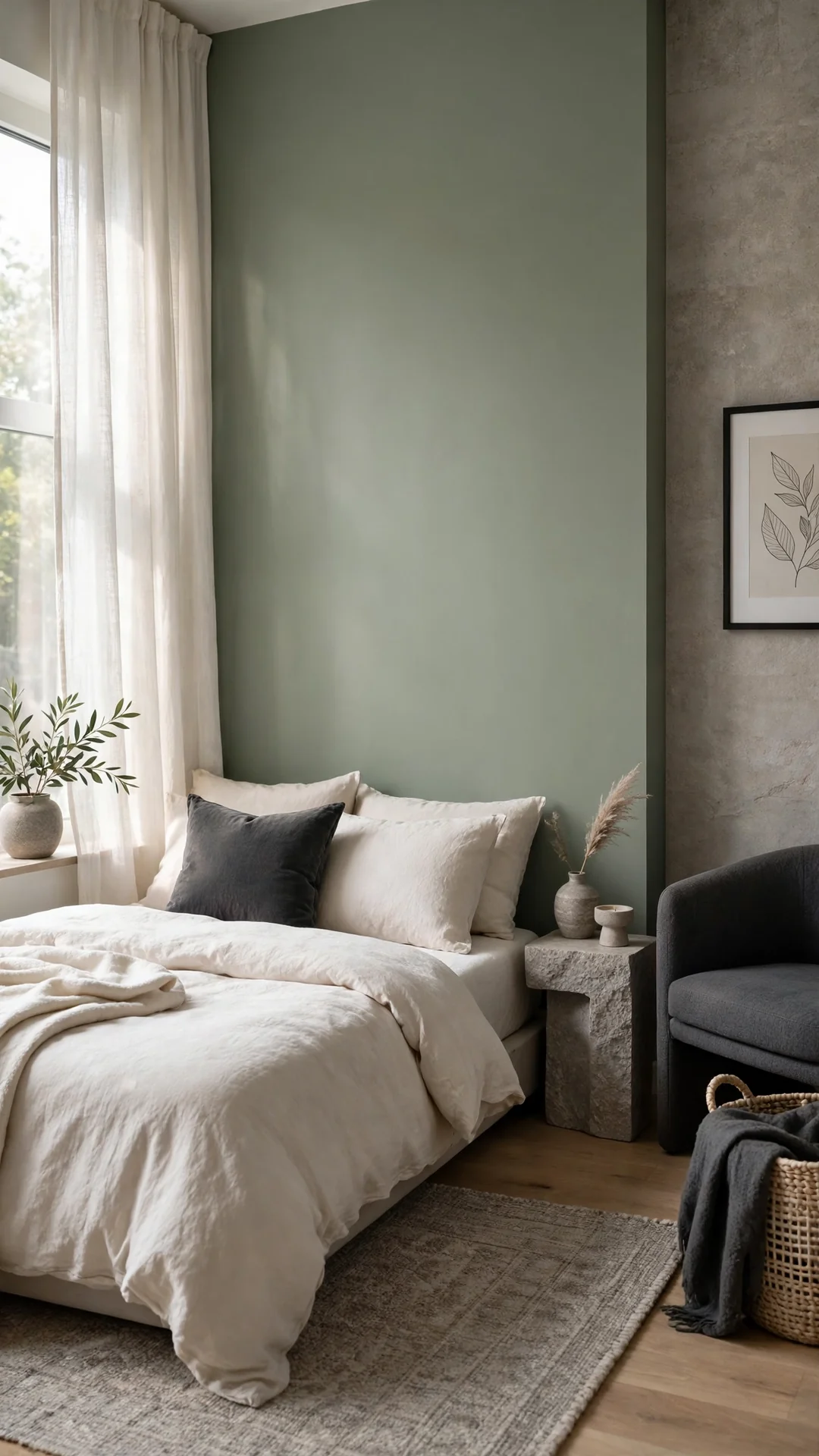
- Warm white for the walls. Not stark, blue-white — that can feel cold at night. A warm white with a hint of cream keeps the room bright in the morning and soft in the evening.
- Sage for calm. Use it on bedding, a cushion, or a single painted feature wall. Sage is the colour this blog is built around for a reason: it reads as nature, not decoration.
- Stone or warm grey for grounding. A stone throw, a grey rug, or natural wood furniture stops the room from floating away into paleness.
- Charcoal for definition. Just a little — a bed frame, a lamp base, picture frames, or the legs of a chair. Charcoal gives the eye somewhere to land, so the soft colours do not blur together.
Paint the walls first, then bring the other colours in through things you can change: bedding, curtains, a rug. That way, if you tire of sage in two years, you are not repainting the whole room.
A quick test before you commit: paint a large swatch, not a tiny square, and look at it in morning light, afternoon light, and lamplight. Muted colours shift more than bold ones do, and a shade you love at noon can look grey and dull at 9 p.m.
2. Bedding in layers — spend where you sleep, save where you look
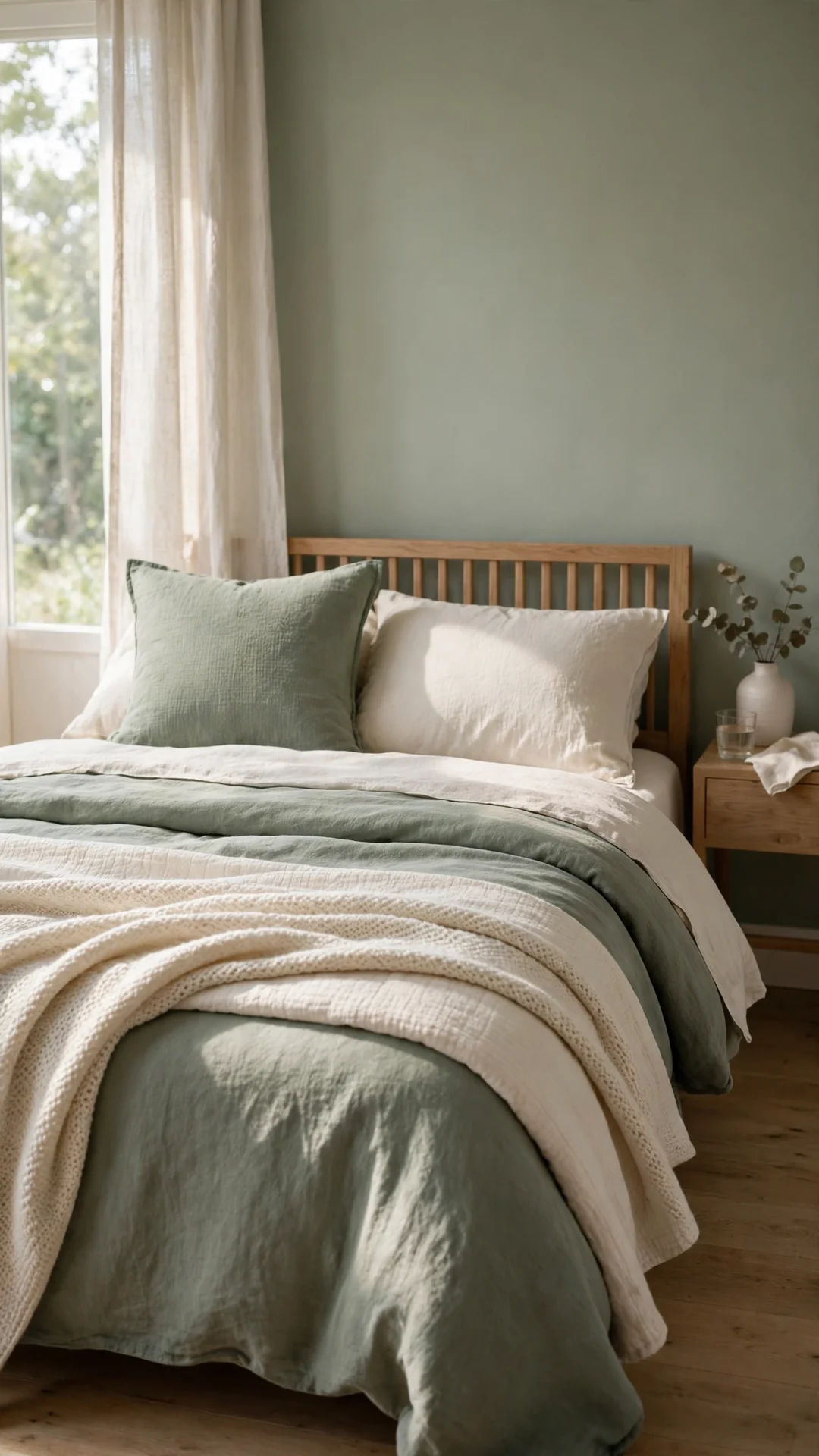
You spend a third of your life in bed, so this is the one place where spending a little more pays back every night.
Spend on: a good mattress protector, a duvet that suits your climate, and pillowcases that feel good against skin. If you are in a warm climate, look for breathable cotton or linen; if your nights are cool, a slightly heavier duvet will matter more than any decorative cushion.
Save on: the decorative layer. A simple cotton duvet cover in warm white or sage, one textured throw, and two sleeping pillows plus two standard pillows are enough. You do not need six cushions to make a bed look finished — in fact, six cushions are the first thing you will throw on the floor every night, which defeats the point of a calm room.
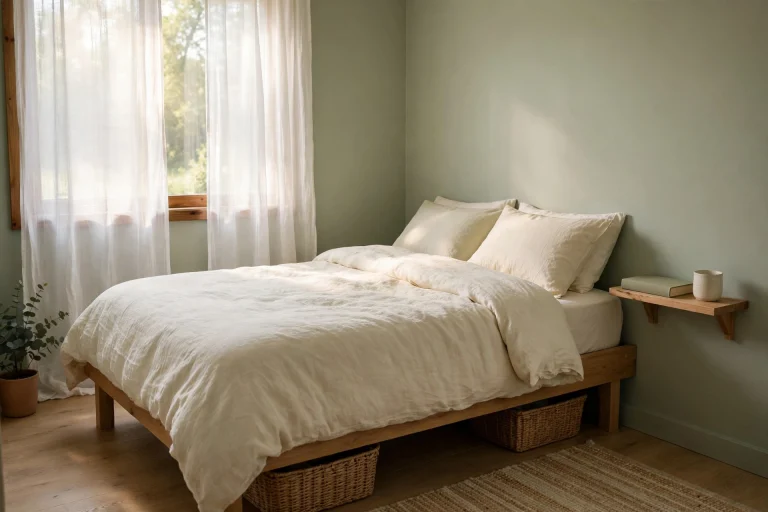
Layer in this order: fitted sheet, duvet, a folded throw across the foot of the bed, and one or two cushions at most. Make the bed every morning, even roughly. A made bed is the fastest way to make a whole room feel intentional, and it costs nothing.
3. Lighting: warm, layered, and dimmable
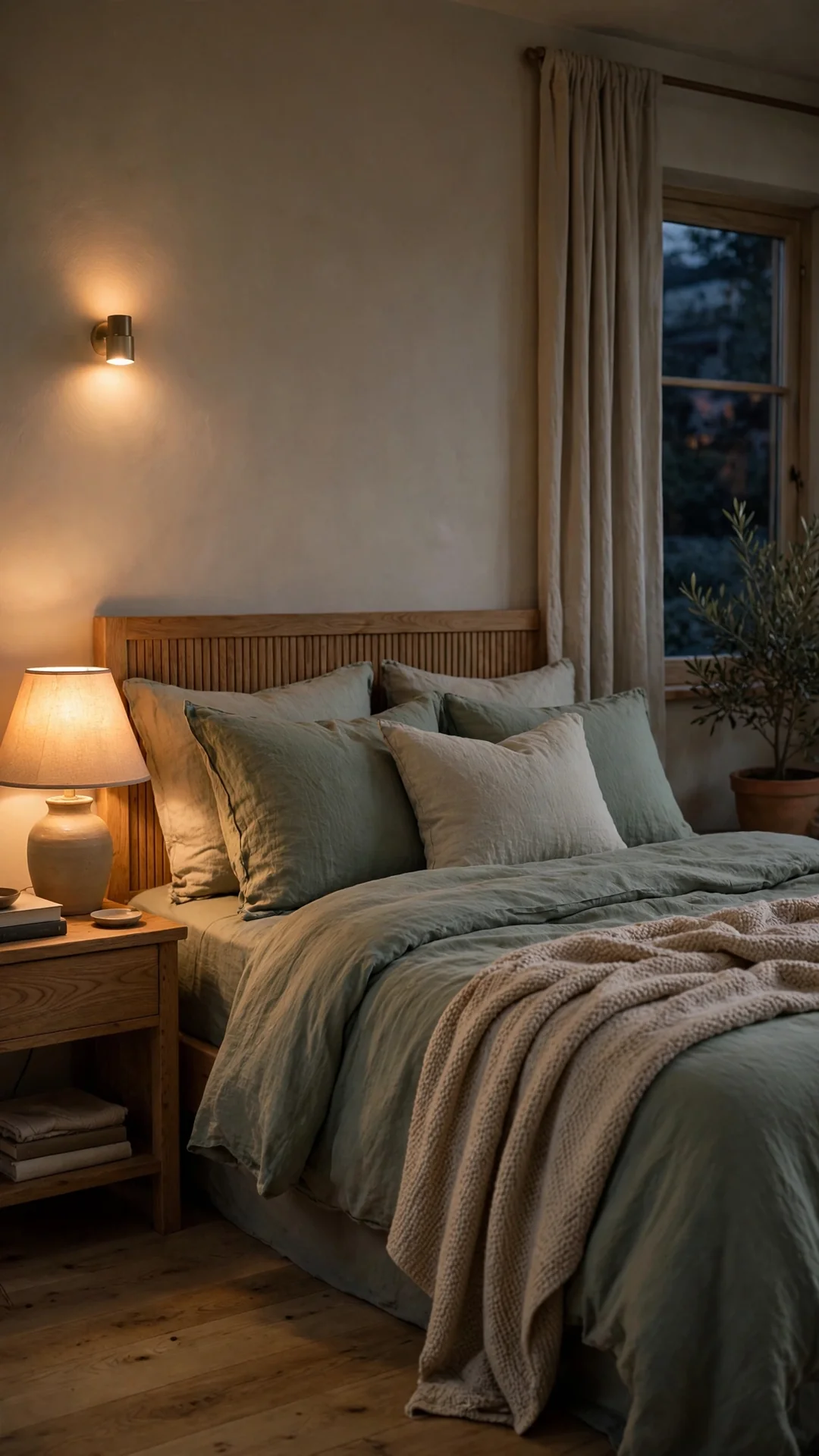
One bright ceiling light is the enemy of a restful bedroom. It flattens everything and makes the room feel like an office at night.
Build three layers instead:
- General light: a ceiling light or pendant, on a dimmer if you can manage it. Keep it warm white, around 2700K, not cool daylight.
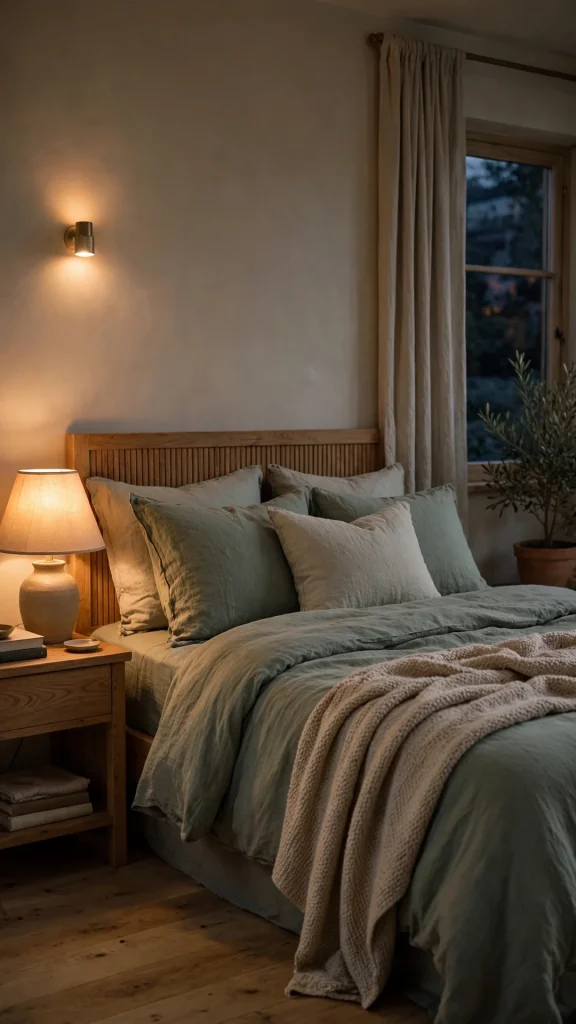
- Task light: a bedside lamp on each side, or wall lights if bedside tables are small. These are what you actually use for reading.
- Low light: a small warm lamp, a candle-style LED, or a dim bedside light for the last half-hour before sleep. This is the layer that tells your brain the day is ending.
One budget swap that makes a real difference: if you cannot rewire for a dimmer, use a smart bulb or a lamp with three brightness settings. You get most of the effect for the price of a bulb, with no electrician needed.
Keep screens out of this layering, as much as you can. Charging a phone on the bedside table is practical, but a glowing screen at midnight undoes all the warm light you just arranged. A small tray or a drawer for the phone is a tiny habit with an outsized effect on sleep.
4. Storage that keeps the room calm
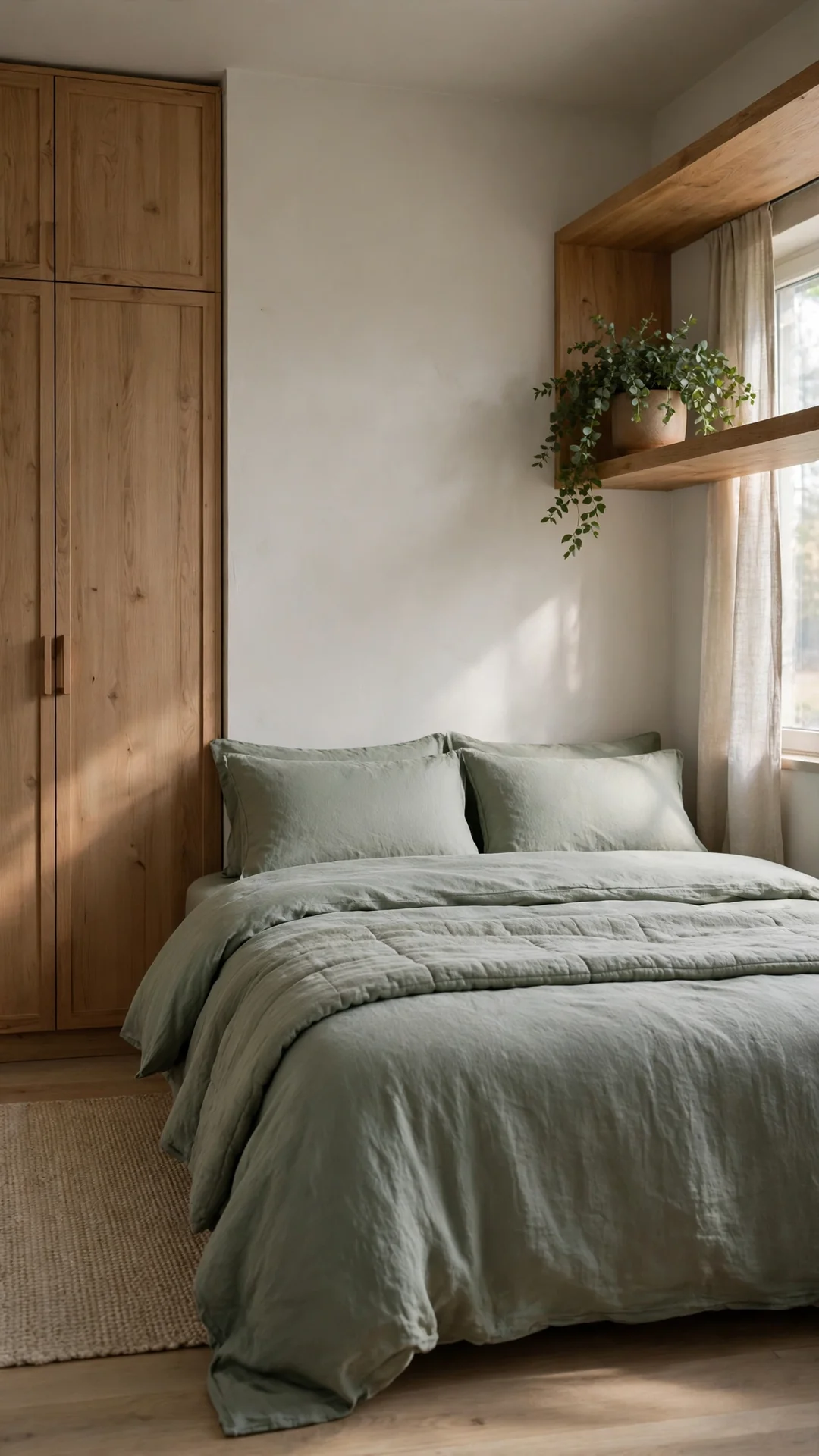
Clutter is not a moral failing — it is usually just a storage problem. A calm bedroom needs closed storage first, and open storage second.
The closed-storage rule: most things should live behind a door or in a drawer. A wardrobe, a dresser, or under-bed boxes will do more for calm than any colour scheme. If you can see everything you own from the bed, the room will never feel restful.
The one-open-shelf rule: allow yourself one open shelf, or one open surface, for the things you genuinely like looking at — a plant, a framed photo, a favourite book. Everything else goes away. When that shelf starts to fill up, something has to leave before something new arrives.
Two practical fixes that help immediately: a laundry basket with a lid, so clothes in transit do not become a pile on a chair, and a small tray on the dresser for the everyday items — keys, watch, lip balm — that otherwise scatter across every surface.
This is the same thinking behind the small-space ideas in the bathroom post: use the space you already have, vertically and behind closed doors, before you buy anything new. If you missed it, the bathroom ideas are here: 9 Tiny Bathroom Remodel Ideas on a Budget
5. Three common mistakes to avoid
Too many colours. A muted room with five accent colours is not muted anymore. Pick your four colours, and repeat them. Repetition is what makes a room feel designed rather than collected by accident.
All-white flatness. All white, with no wood, no texture, and no darker accent, can feel like a showroom, not a bedroom. Add texture instead of colour when you want interest: linen, wool, rattan, brushed wood, a woven rug. Texture reads as warmth without shouting.
Oversized furniture. A bed that is too large for the room, or a wardrobe that blocks light, will make even a calm palette feel cramped. Leave room to walk around the bed on both sides if you can, and keep at least one wall — ideally the one you face from the bed — relatively clear.
A small-budget makeover checklist
If you want to start this weekend, do it in this order:
- Remove everything that does not belong in a bedroom, and everything you have not used in a month.
- Make the bed properly, with layered bedding in your chosen palette.
- Swap the ceiling bulb for a warm one, and add or fix a bedside lamp.
- Add one closed storage solution — under-bed boxes are the cheapest start.
- Put one plant, or one piece of art, where you will see it first thing in the morning.
- Stop there, live with it for a week, and only then decide what else the room actually needs.
You may find, as I did, that steps one to five already change how the room feels — and that the urge to buy more fades once the room is calm.
FAQ
Can a muted bedroom still feel warm?
Yes, if you use warm whites, natural wood, and texture. Coldness usually comes from cool white paint, grey light, and hard surfaces with nothing soft to balance them — not from the muted palette itself.
Do I need to buy matching furniture?
No. Matching sets can look flat. It is better to repeat colours and materials — for example, light wood in two or three pieces — than to buy everything from one range.
What if my bedroom is very small?
Keep the palette light, keep furniture low where possible, use a mirror to bounce light, and be stricter about the one-open-shelf rule. Small rooms reward restraint more than large ones do.

About the author
Hi, I'm Alia. I write about calm, muted homes that still feel lived in — better light, softer colours, and simple ideas that work on a real budget, learned in my own small home.